
What is appendicitis?
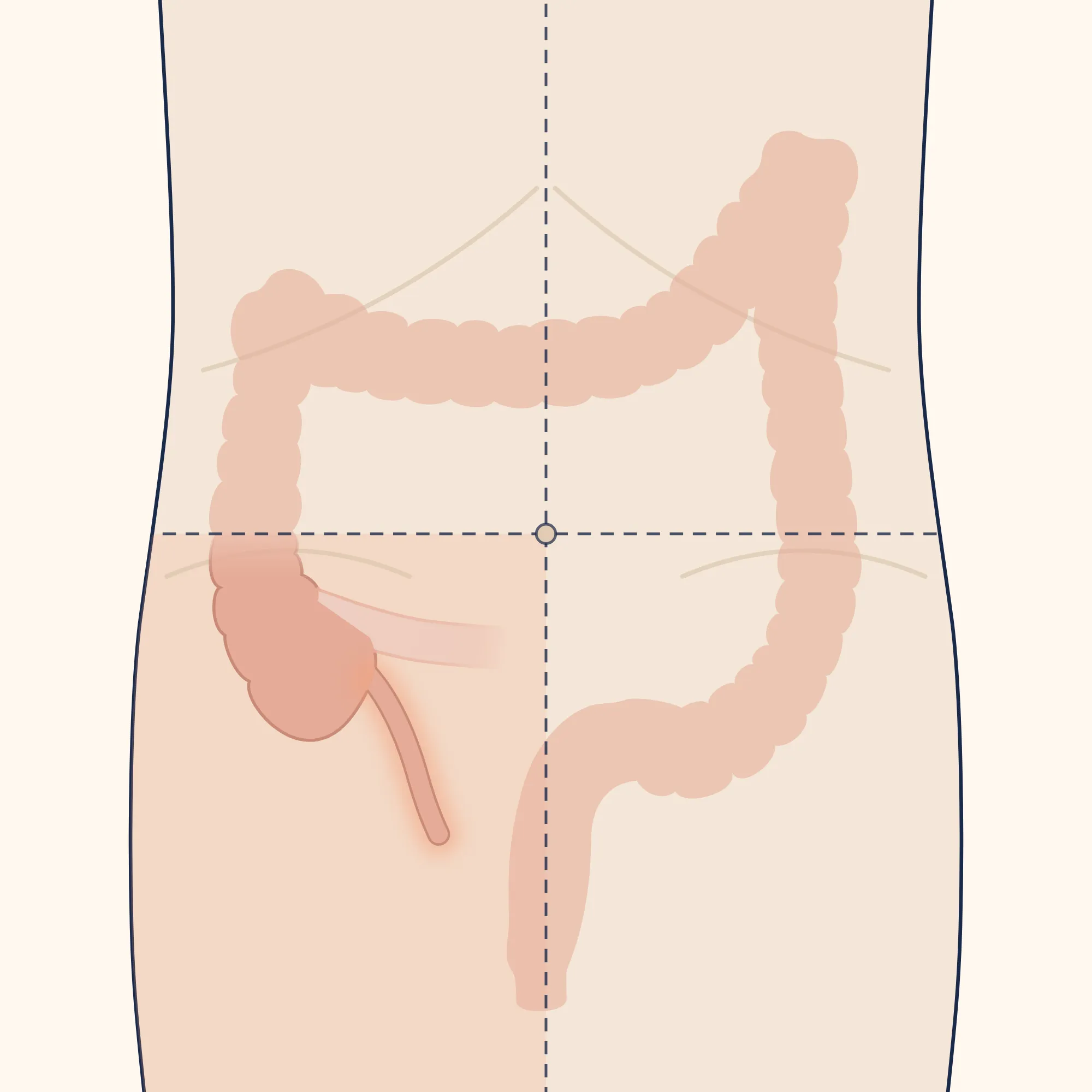
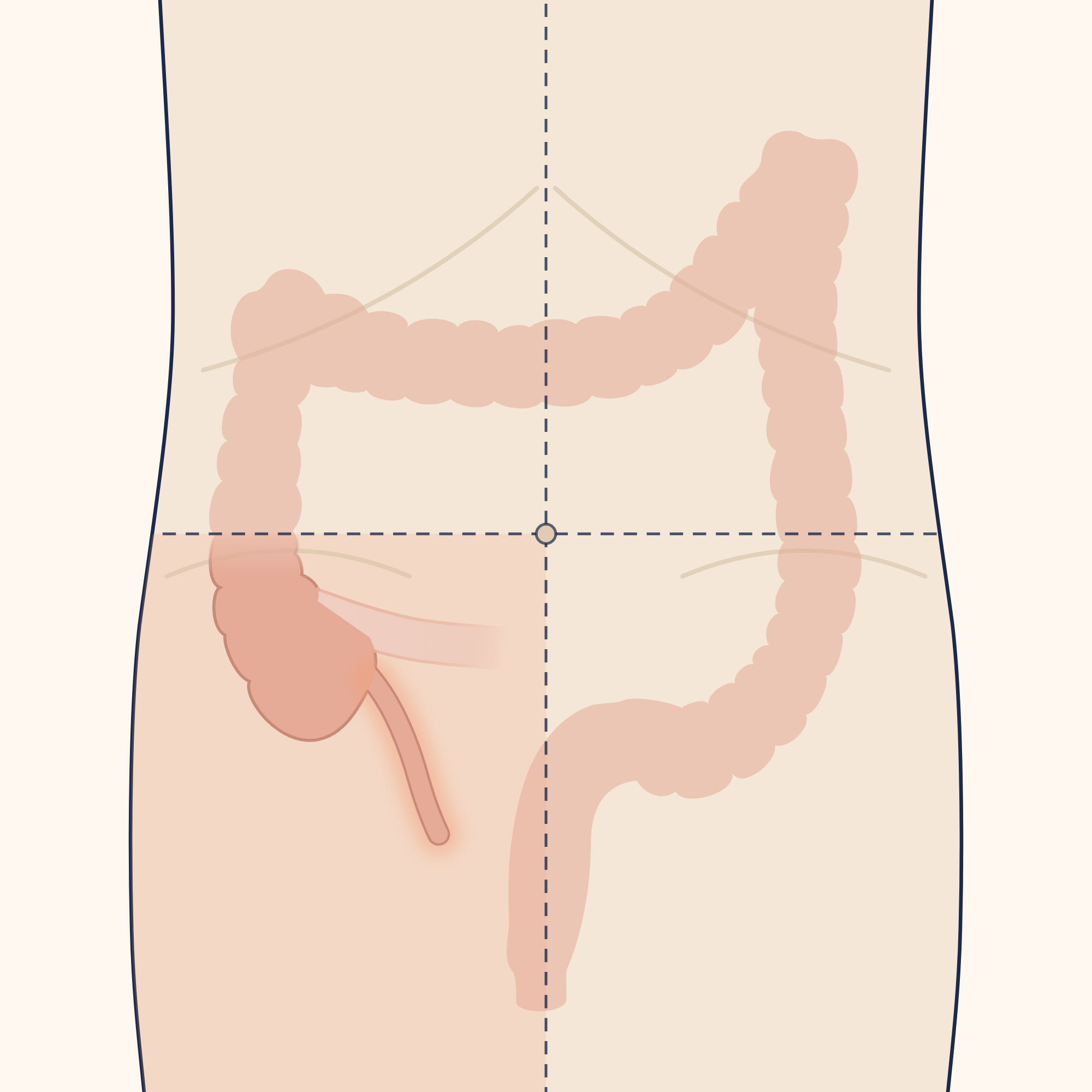
The appendix is a projection about 5–15 cm long from the first part of the large bowel; appendicitis is sudden inflammation of the appendix[1]. It is the most common abdominal surgical emergency worldwide[3]. It occurs most often between the ages of 10 and 30[2].
Appendicitis is divided into two types: simple (uncomplicated) appendicitis, where there is only inflammation, and complicated appendicitis, where the wall of the appendix has died (gangrene), has perforated, or an inflammatory mass or abscess has formed around it[1, 5].
What causes appendicitis?
The exact cause is not known[1]. A blockage inside the appendix, most often by a hardened piece of stool (an appendiceal stone), may cause it, particularly when the appendix perforates; however, these stones are also found in healthy people with no symptoms[1]. There is no known way to prevent appendicitis[1].
What are the symptoms of appendicitis?
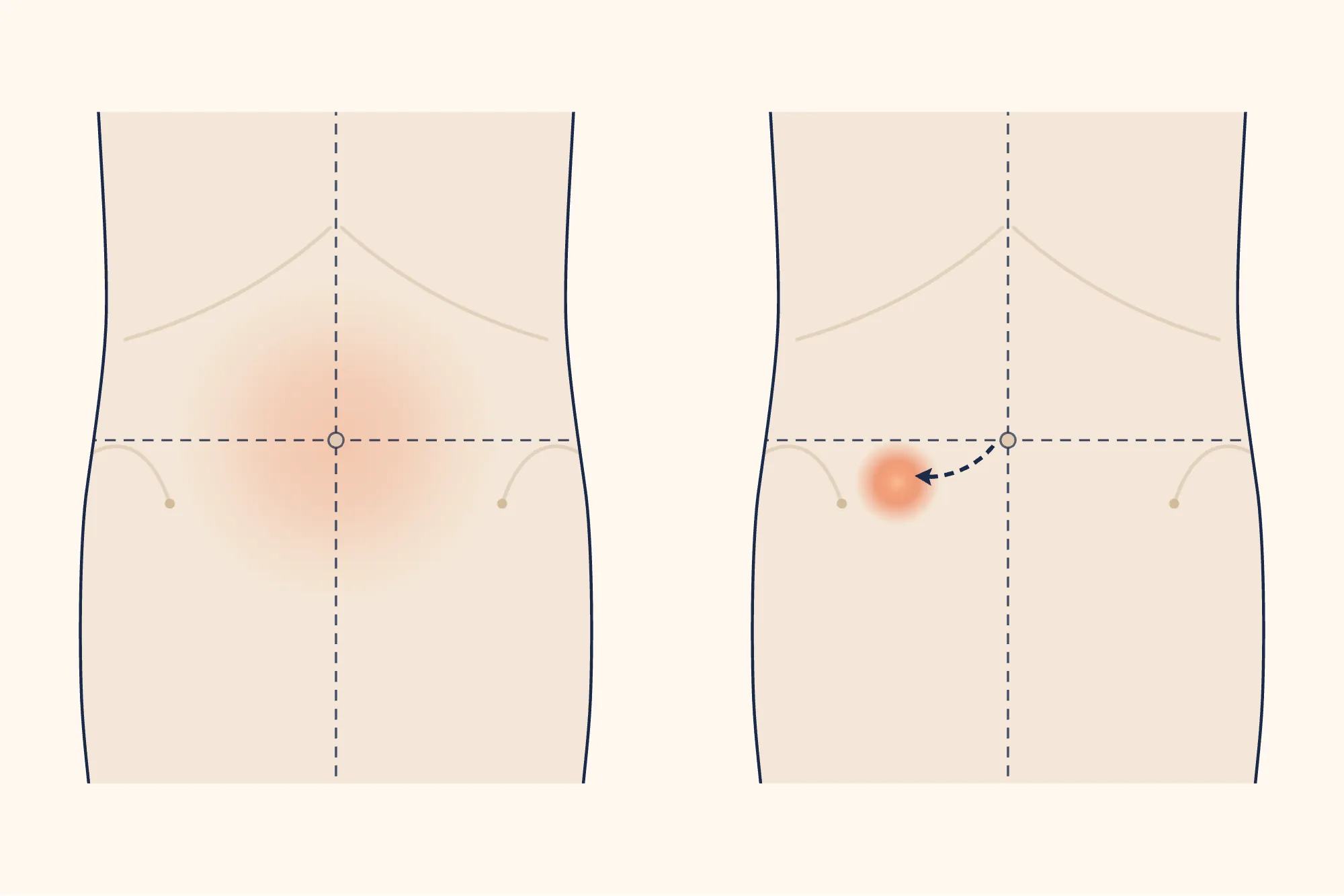
Symptoms most often start with weakness and moderate pain around the belly button or throughout the abdomen[1, 4]. The pain usually moves to the lower right side of the abdomen within a few hours and becomes worse[1, 4]. This movement of the pain is a typical sign of appendicitis[1]. Coughing, walking and moving make the pain worse[1]. A fever also usually starts at this stage[1].
Enlarge
Swipe the drawing right or left to see the details. You can use the arrow keys on your keyboard.
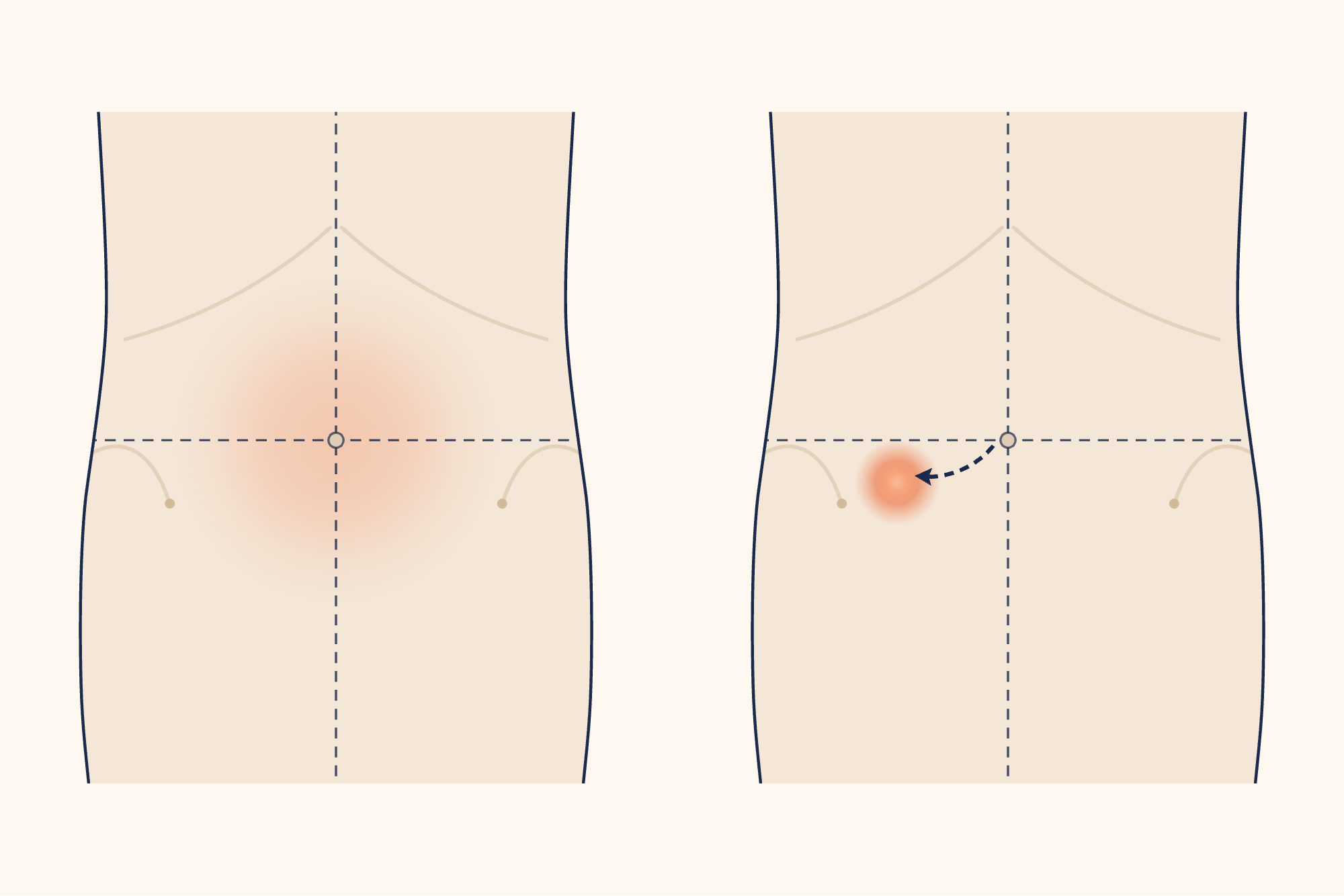
- 1 First: moderate pain around the belly button
- 2 A few hours later: worsening pain in the lower right side of the abdomen
- 3 Movement of the pain
- 4 Belly button
- 5 Person's right side
Description of the drawing
The start is shown on the left, a few hours later on the right. Appendicitis pain most often starts as moderate pain around the belly button or throughout the abdomen; it usually moves to the lower right side of the abdomen within a few hours and becomes worse. The location of the pain can vary depending on the position of the appendix within the abdomen.
Illustrative drawing, not to scale. Source: Cancer Research UK / Wikimedia Commons, CC BY-SA 4.0. Only the outline of the torso was taken from the appendix drawing adapted from this source; everything else was newly drawn for this site. This adaptation is also licensed under CC BY-SA 4.0.
Loss of appetite, nausea, vomiting, abdominal bloating, constipation or diarrhoea, and urinating more often than usual may also occur[1, 4]. It is not possible to tell reliably whether someone has appendicitis from a single symptom[1, 5]. Do not try to diagnose yourself; seek medical help if you are worried[4].
Where is appendicitis pain felt, on the right or the left?
Appendicitis pain is typically located in the lower right abdomen[1, 4]. However, the location of the pain can vary depending on the position of the appendix within the abdomen[1]. If the appendix lies behind the large bowel or in the pelvis, signs caused by irritation of the abdominal lining may be mild or absent; inflammation in the pelvis can sometimes cause painful spasms in the anus and frequent bowel movements[1].
Appendicitis in women, during pregnancy and in older age
In women: Conditions such as a ruptured ovarian cyst or an ectopic pregnancy can cause pain similar to appendicitis[4]. Women of childbearing age with abdominal pain should have a pregnancy test; if a gynaecological condition is suspected, a gynaecologist should examine them[1].
During pregnancy: Diagnosis is difficult because abdominal pain, nausea and vomiting are already common during pregnancy; later in pregnancy, pain may be felt throughout the right side of the abdomen[1]. An increased risk of premature birth has been reported with appendicitis, particularly if the appendix perforates[1]. The Swedish national guideline recommends that women with abdominal pain from 22 weeks of pregnancy onwards be assessed in a labour ward or obstetrics and gynaecology clinic, and earlier in pregnancy in an emergency department or an obstetrics and gynaecology emergency department[1]. An American guideline conditionally recommends surgery rather than antibiotics during pregnancy, although the certainty of the evidence is very low[6]. Treatment should always be carried out together with an experienced obstetrician-gynaecologist[1].
In older age: Only a small proportion of people over 65 have all the typical symptoms together; not every patient has a fever[7]. Sudden confusion may also be a symptom[4]. At this age, complicated appendicitis is more common and the risk of death is higher[1, 7]. One guideline recommends a planned examination of the large bowel for everyone over 65 who has had appendicitis, whether or not they have surgery; this recommendation is based on very low-quality evidence[7].
What happens if the appendix bursts?
The appendix can perforate (commonly called “bursting”); this can happen even within a few hours of symptoms starting[1]. If the appendix perforates, the pain may suddenly ease for a short time; this is usually followed by severe pain spreading throughout the abdomen[4]. The person's general condition worsens further and their fever rises; coughing or jumping makes the pain worse[1]. In this situation, call 112 or go to the nearest emergency department[4].
The longer symptoms have lasted before arriving at hospital, the more often perforation occurs; most perforations most likely happen before arrival at hospital[1]. Death from appendicitis is very rare in high-income countries (0.09–0.24%); the risk increases after the age of 75 and when the appendix perforates[1, 2].
What helps with appendicitis pain?
Appendicitis is treated urgently in hospital, not at home[4]. Do not drive to the emergency department; ask someone to take you or call 112, and take any medicines you use with you[4]. You should be given pain relief in hospital to reduce your pain; there is no evidence that strong painkillers such as morphine delay diagnosis[1].
Which department treats appendicitis?
Suspected appendicitis is assessed urgently, most often in the hospital emergency department[1, 4]. The operation is performed by general surgery.
How is appendicitis diagnosed?
The doctor listens to your symptoms, examines your abdomen and checks your blood for signs of inflammation, such as white blood cells and CRP[1, 2]. A scoring system is used to assess the likelihood of appendicitis as low, medium or high[1, 2]. If needed, an ultrasound or a computed tomography (CT) scan is performed; ultrasound is the first choice during pregnancy[1, 2]. No test can detect appendicitis every time[4]. If the likelihood is found to be low, you may be sent home: a follow-up is planned for the next day, by telephone or another examination; seek help sooner if you get worse[1, 2]. For people over 65, observation is recommended before they are sent home[7].
How is appendicitis surgery performed?
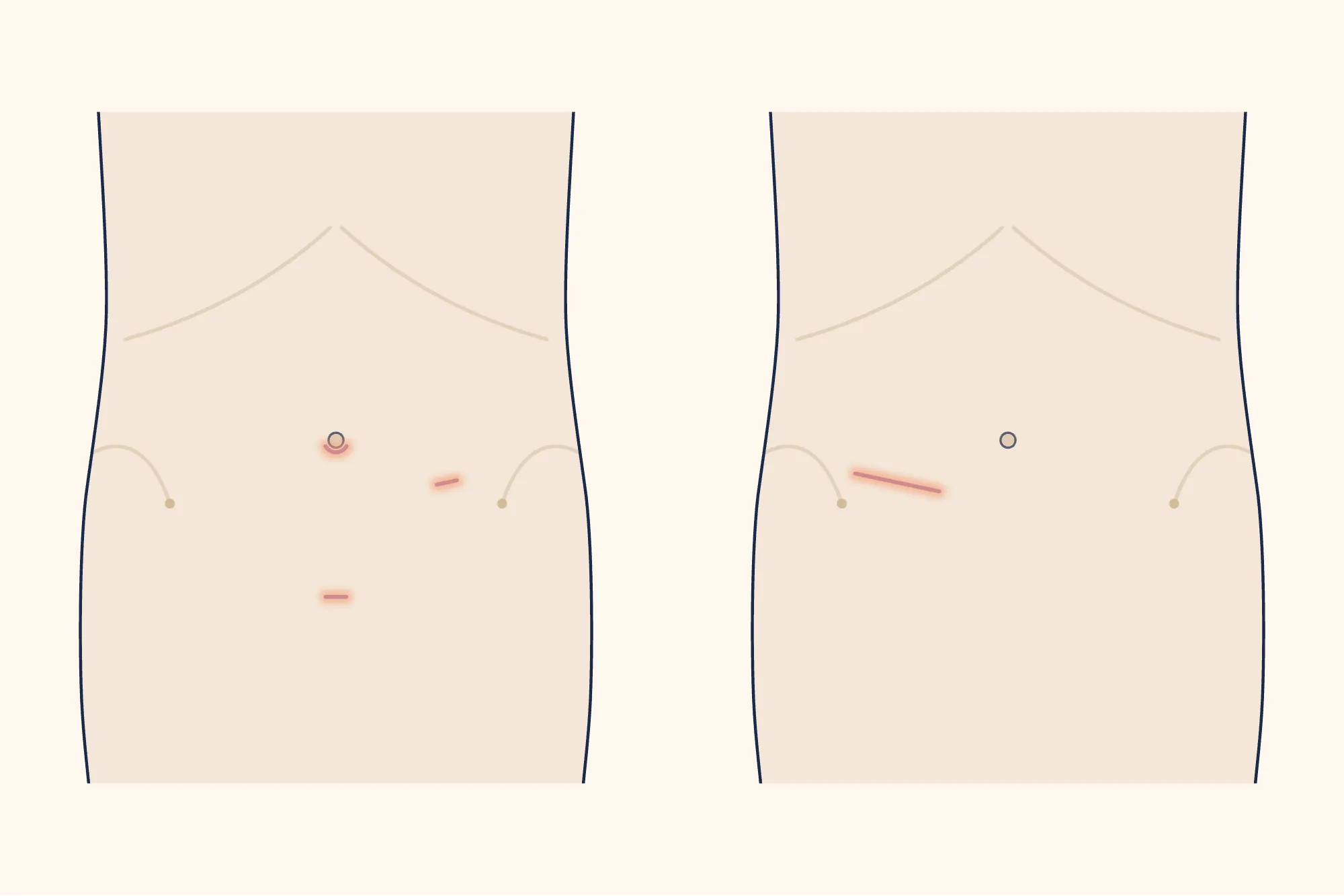
During surgery, the appendix is removed (appendicectomy); the first choice is keyhole surgery (laparoscopy), usually performed through three small openings in the abdomen[1, 2, 3]. Sometimes open surgery through a larger cut in the lower right side of the abdomen is needed[4]. Open surgery may also be chosen in advanced pregnancy[1, 6]. Compared with open surgery, keyhole surgery involves less pain, fewer wound infections, a shorter hospital stay and an earlier return to work[2]; however, the operation takes longer and some studies have reported abscesses inside the abdomen more often[2, 5]. The operation usually takes about an hour[4].
Enlarge
Swipe the drawing right or left to see the details. You can use the arrow keys on your keyboard.
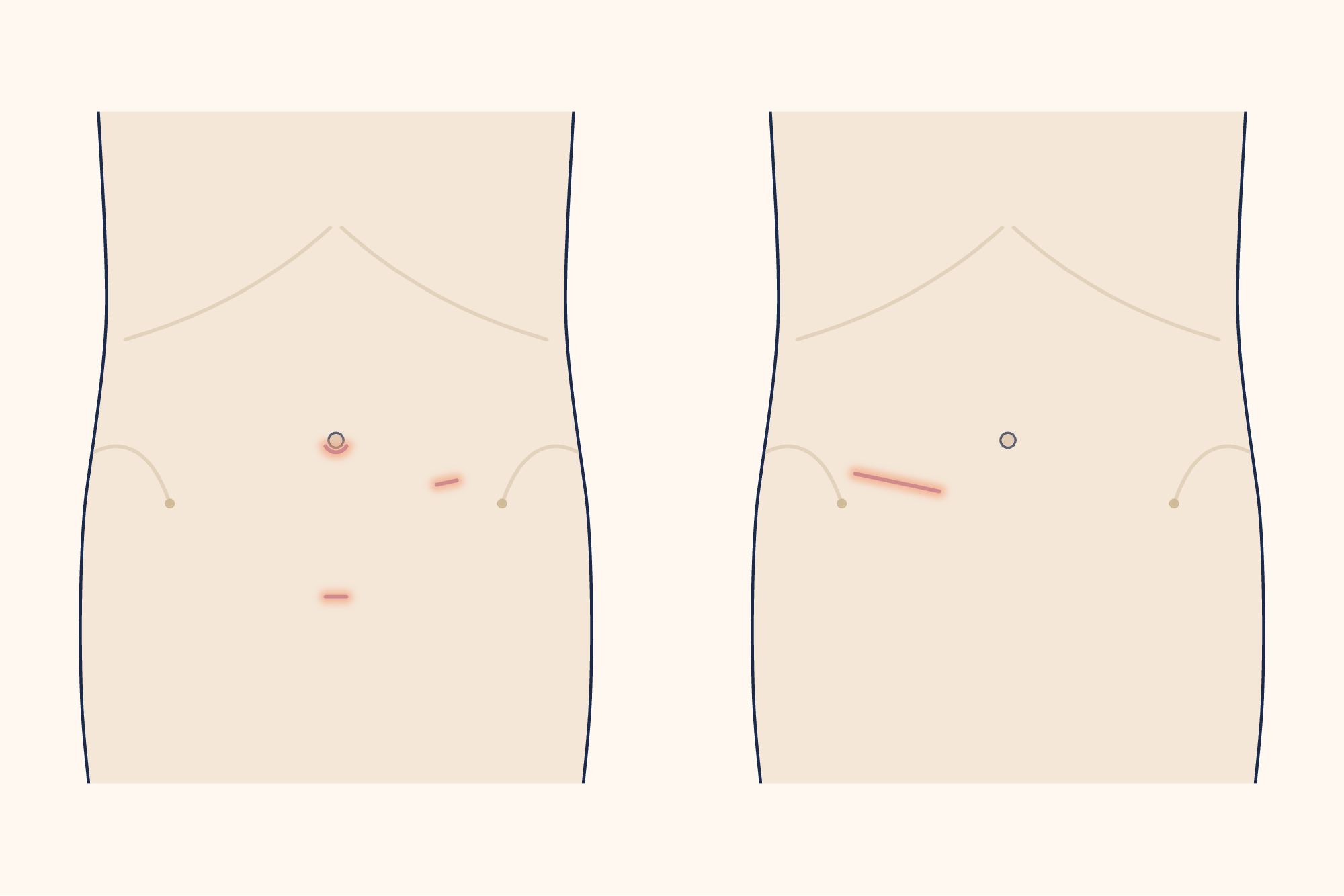
- 1 Keyhole surgery (laparoscopy): three small openings
- 2 Open surgery: cut in the lower right side
- 3 Belly button
- 4 Person's right side
Description of the drawing
Keyhole (laparoscopic) surgery on the left, open surgery on the right. Keyhole surgery is usually performed through three small openings; their positions can vary, and the drawing shows one of the commonly used arrangements. In open surgery, a larger incision is made in the lower right side of the abdomen.
Results may vary from person to person with any surgical or interventional procedure. You are advised to discuss the procedure in detail with your doctor beforehand.
Illustrative drawing, not to scale. Source: Cancer Research UK / Wikimedia Commons, CC BY-SA 4.0. Only the outline of the torso was taken from the appendix drawing adapted from this source; everything else was newly drawn for this site. This adaptation is also licensed under CC BY-SA 4.0.
For uncomplicated appendicitis, it is safe to schedule surgery for the first suitable time within 24 hours of arrival at hospital; this wait does not increase the risk of perforation or complications[1, 2, 3]. Your condition is monitored during this time, and if it worsens, the operation is brought forward[1].
The removed appendix should be sent for pathological examination: another condition requiring treatment may be found in about 2% of adults[1]. The surgeon who performed the operation follows up the result; if the result is appendicitis, the Swedish national guideline says no additional planned follow-up is needed[1].
Can appendicitis get better with antibiotics without surgery?
Guidelines differ on this: the WSES guidelines (2020 and 2025) consider antibiotics safe and effective for selected patients with uncomplicated appendicitis[2, 3]. WSES 2020 recommends discussing this option with patients if there is no appendiceal stone, explaining that it may fail and that complicated appendicitis may be missed[2]. The Swedish national guideline does not recommend this treatment, stating that antibiotics were not significantly better than an inactive medicine (placebo) in two studies[1]; the American SAGES guideline also makes a conditional recommendation in favour of surgery[8]. In older people who are fit for surgery, treatment with antibiotics alone is generally not recommended[9].
Antibiotic treatment fails during the initial hospital stay in about 8–10% of adults; in 20–25%, appendicitis recurs or surgery is needed within the first year[1, 2]. In the long term, appendicitis recurs in about 40% of adults[1, 2]. Treatment usually starts in hospital with antibiotics given through a vein and continues with antibiotics taken by mouth; the total duration is 7–10 days[1, 2]. The choice is made together with your surgeon after discussing these possibilities[2]. If symptoms return after treatment without surgery, see a doctor or go to the emergency department without delay[1].
If there is an abscess around the appendix
Sometimes tissues inside the abdomen surround the inflamed appendix and a mass forms; if it contains pus, it is called an abscess[1]. Guidelines differ on whether the abscess should first be treated with antibiotics and drainage of the pus through a thin tube or with keyhole surgery[1, 2]. If the abscess was treated without surgery, investigations such as colonoscopy to check for a tumour and planned removal of the appendix later are recommended for people aged 35 and over[3, 10]. The Swedish guideline, however, recommends planned removal only if a tumour is suspected or symptoms recur[1].
Is appendicitis surgery risky?
Studies have reported complication rates after surgery of between 3% and 28.7%; the most common problems are wound infection, an abscess inside the abdomen and bowel obstruction[2, 5]. Rarely, the small piece of appendix left behind may become inflamed again[4, 5]. In the long term, a hernia in the abdominal wall and bowel obstruction caused by adhesions may occur; the risk of obstruction is about 1.5% over 15 years and is lower in uncomplicated appendicitis[1]. It has not been conclusively shown that removing the appendix increases or decreases the risk of another disease later in life; no effect on fertility has been seen in women[1].
How long does recovery after appendicitis surgery take?
Most people recover in 1–2 weeks; recovery may take longer if the appendix has perforated[4]. You may be able to go home the day after keyhole surgery; after open surgery or a complication, you may need to stay in hospital for a few days[4].
Getting up and moving early and eating and drinking as soon as possible after surgery are recommended[1]. A rest of 7–14 days before returning to work is often enough[1]. Avoid strenuous activities such as sport until you have fully recovered, and consult your doctor about this; do not drive until you can drive safely and comfortably, including performing an emergency stop[4].
Sources
11
- Salö M, Tiselius C, Rosemar A, Öst E, Sohlberg S, Andersson RE. Swedish national guidelines for diagnosis and management of acute appendicitis in adults and children. BJS Open. 2025;9(2):zrae165. doi: 10.1093/bjsopen/zrae165. PubMed: 40203150.
- Di Saverio S, Podda M, De Simone B, Ceresoli M, Augustin G, Gori A, et al. Diagnosis and treatment of acute appendicitis: 2020 update of the WSES Jerusalem guidelines. World J Emerg Surg. 2020;15(1):27. doi: 10.1186/s13017-020-00306-3. PubMed: 32295644.
- Podda M, Ceresoli M, De Simone B, Fugazzola P, Pata F, Balla A, et al. Diagnosis and Treatment of Acute Appendicitis: 2025 Edition of the World Society of Emergency Surgery Jerusalem Guidelines. JAMA Surg. 2026;161(3):283–295. (Only the abstract could be read.) doi: 10.1001/jamasurg.2025.6218. PubMed: 41604201.
- NHS (United Kingdom National Health Service). Appendicitis: patient information page. Last reviewed: 9 August 2024. Text: www.nhs.uk.
- Gorter RR, Eker HH, Gorter-Stam MAW, Abis GSA, Acharya A, Ankersmit M, et al. Diagnosis and management of acute appendicitis. EAES consensus development conference 2015. Surg Endosc. 2016;30(11):4668–4690. doi: 10.1007/s00464-016-5245-7. PubMed: 27660247.
- Kumar SS, Collings AT, Wunker C, Athanasiadis DI, DeLong CG, Hong JS, et al. SAGES guidelines for the use of laparoscopy during pregnancy. Surg Endosc. 2024;38(6):2947–2963. doi: 10.1007/s00464-024-10810-1. PubMed: 38700549.
- Fugazzola P, Ceresoli M, Agnoletti V, Agresta F, Amato B, Carcoforo P, et al. The SIFIPAC/WSES/SICG/SIMEU guidelines for diagnosis and treatment of acute appendicitis in the elderly (2019 edition). World J Emerg Surg. 2020;15(1):19. doi: 10.1186/s13017-020-00298-0. PubMed: 32156296.
- Kumar SS, Collings AT, Lamm R, Haskins IN, Scholz S, Nepal P, et al. SAGES guideline for the diagnosis and treatment of appendicitis. Surg Endosc. 2024;38(6):2974–2994. (Only the abstract could be read.) doi: 10.1007/s00464-024-10813-y. PubMed: 38740595.
- Antoniou SA, Mavridis D, Kontouli KM, Drakopoulos V, Gorter-Stam M, Eriksson S, et al. EAES rapid guideline: appendicitis in the elderly. Surg Endosc. 2021;35(7):3233–3243. (Only the abstract could be read.) doi: 10.1007/s00464-021-08524-9. PubMed: 33999255.
- Montori G, Podda M, Giordano A, Procida G, Butera V, Murzi V, et al. The risk of neoplasms in appendiceal abscess: what emergency surgeons should know. Front Oncol. 2026;16:1767622. doi: 10.3389/fonc.2026.1767622. PubMed: 42158429.
- Mwachaka P, El-busaidy H, Sinkeet S, Ogeng'o J. Variations in the Position and Length of the Vermiform Appendix in a Black Kenyan Population. ISRN Anat. 2014;2014:871048. (Original anatomical study of 48 cadavers; full text, accessed 4 October 2026.) doi: 10.1155/2014/871048. PubMed: 25938112.
Medical review of the Turkish original: Op. Dr. Ömer Seyfullah Hasıripi, . This page is a translation checked by AI reviewers; the Turkish version prevails.
This page is for general information; it does not replace an examination. See a doctor about your symptoms.