What are gallstones and what causes them?
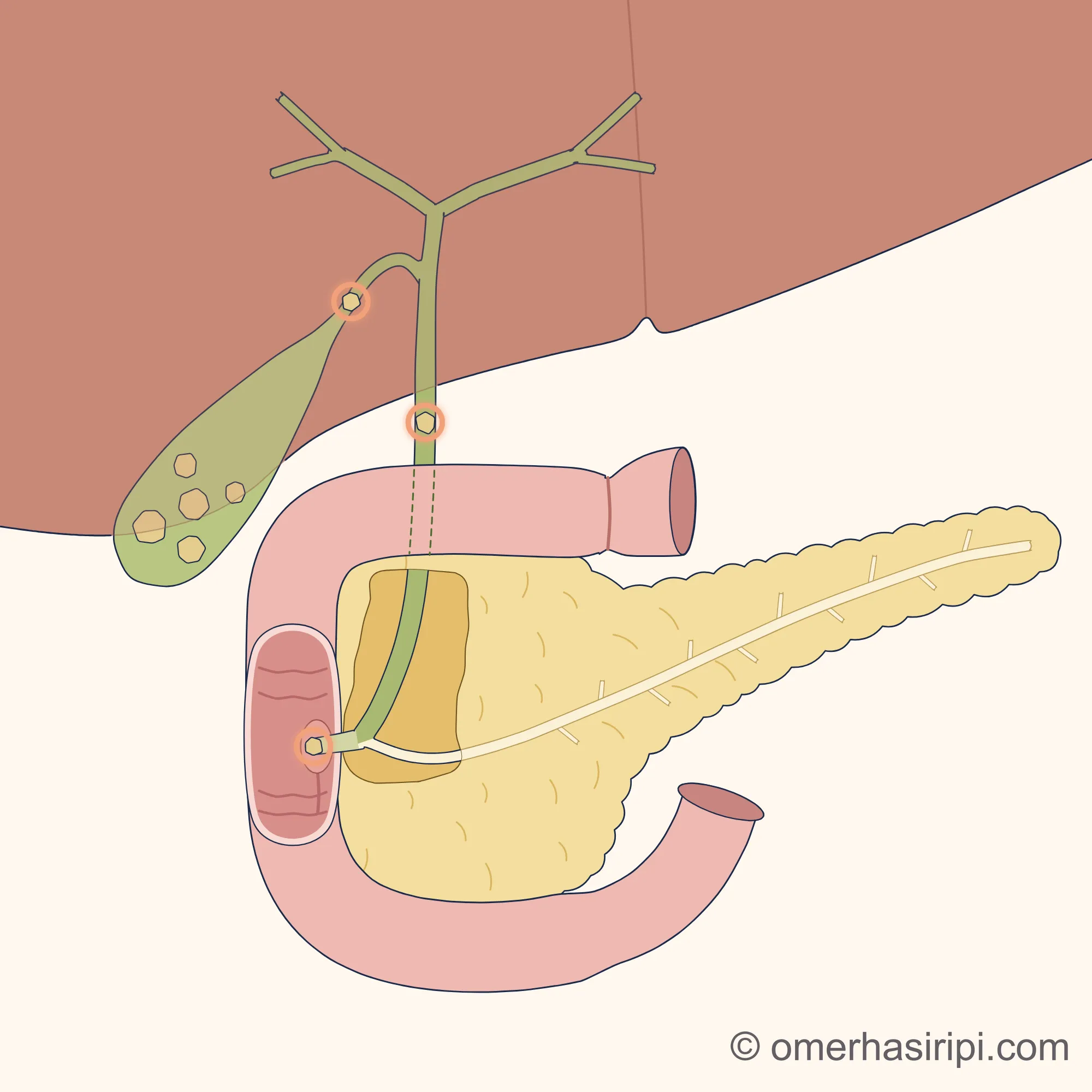
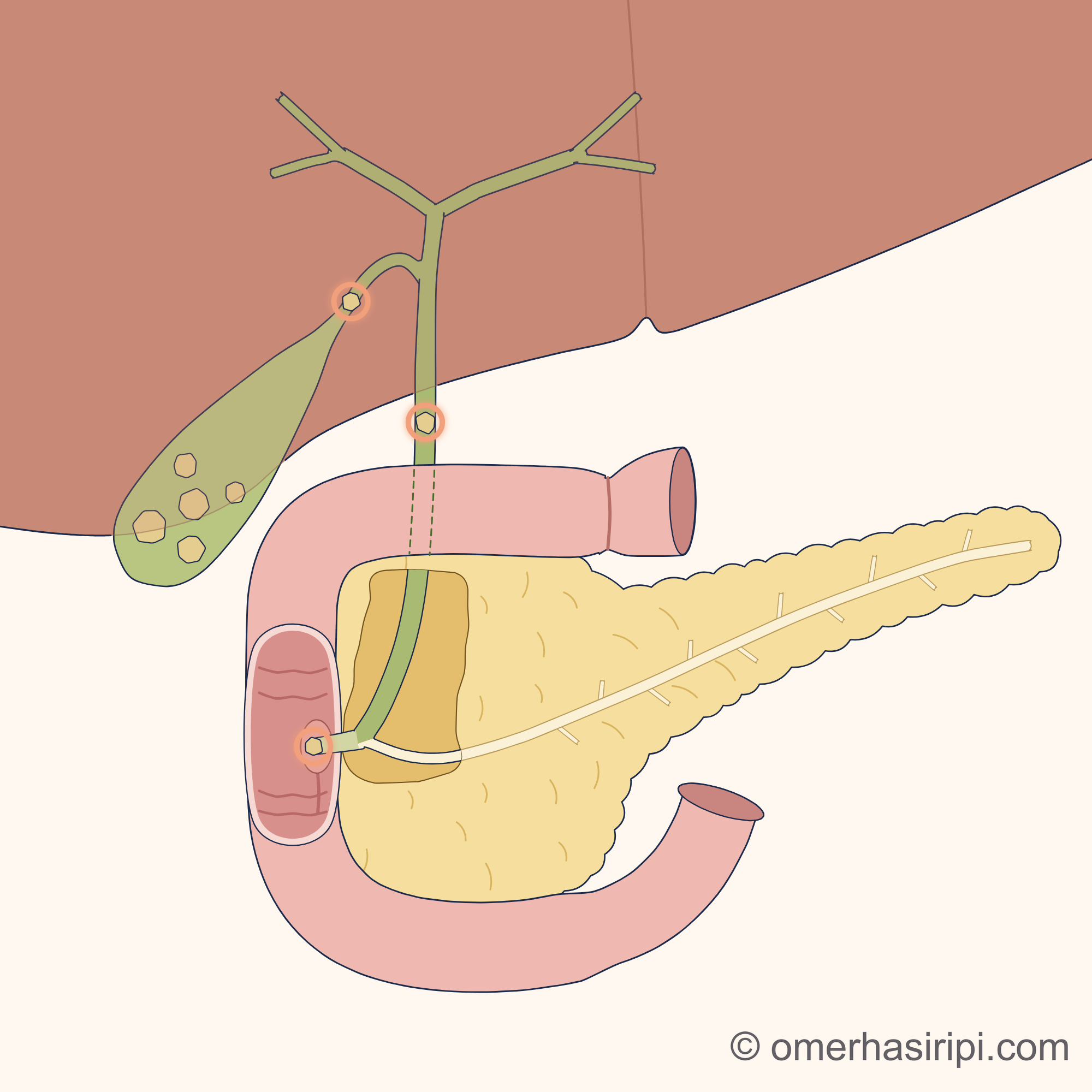
Gallstones are hard deposits made of fatty or mineral substances that form inside the gallbladder[1]. About 15% of adults are thought to have gallstones; most of them have no symptoms at all[1]. In a small number of people, stones can cause pain, infection and inflammation by irritating the gallbladder or blocking part of the bile ducts; if these symptoms are not treated, sometimes life-threatening problems such as jaundice or inflammation of the gallbladder, bile duct or pancreas may develop[1].
Being aged 40 or over, being a woman and being overweight are strong risk factors[3]. Consuming excess calories and animal fat, high blood fats, the contraceptive pill and going without food for a long time may also contribute to the formation of cholesterol stones[3]. Inactivity, a low-fibre diet, losing weight through dieting faster than 1.5 kg a week and frequent weight gain and loss also increase the risk[2].
What are the symptoms of gallstones?
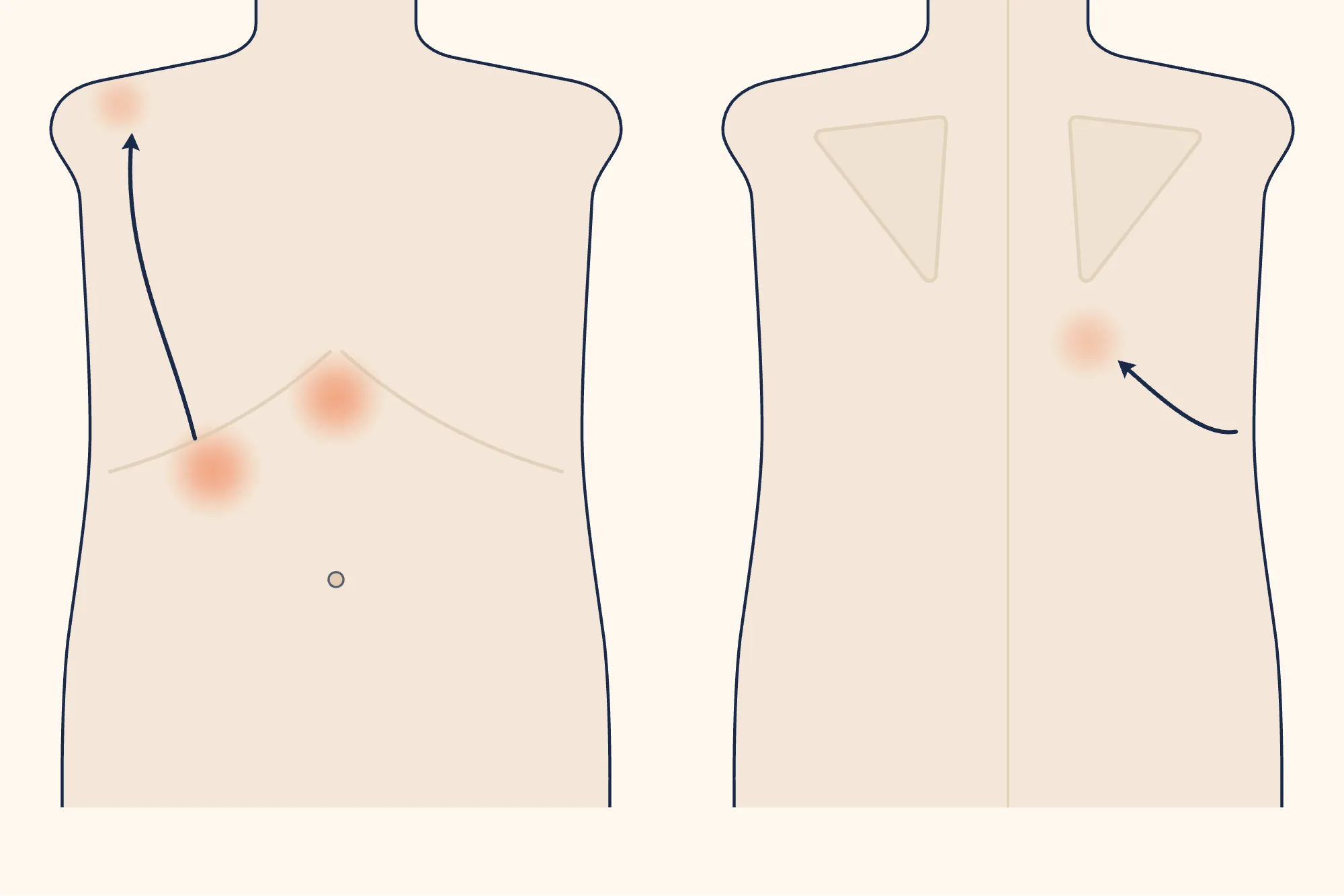
The typical symptom is memorable attacks of pain lasting longer than 15 minutes[2]. The pain may be in the upper middle of the abdomen or just below the ribs on the right[2, 10]; it may spread to the back and right shoulder, nausea is common, and vomiting sometimes occurs too[2]. The pain may last longer than half an hour, up to several hours[10]; attacks mostly begin late in the evening or at night[2].
Enlarge
Swipe the drawing right or left to see the details. You can use the arrow keys on your keyboard.
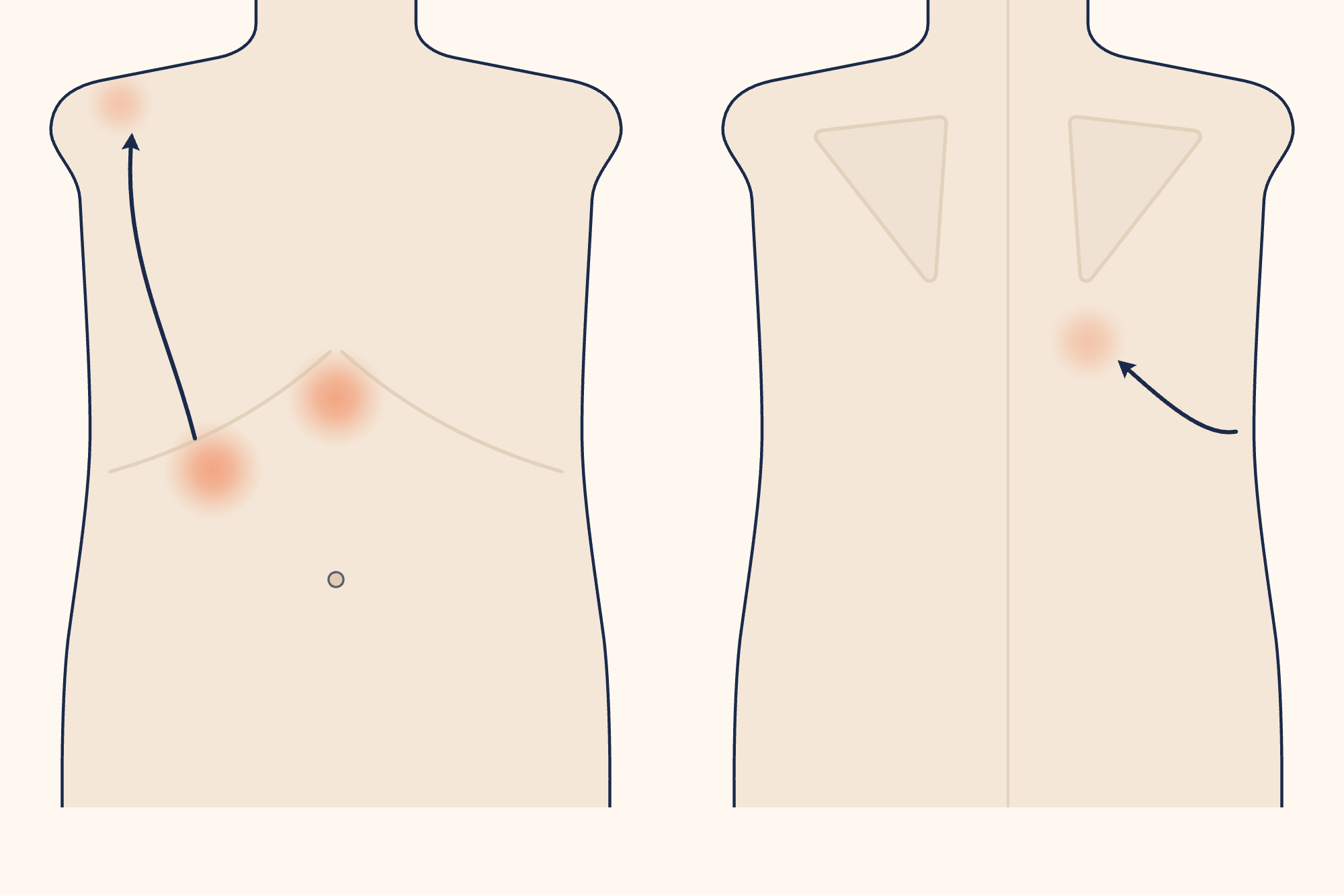
- 1 Upper middle of the abdomen
- 2 Just below the ribs on the right
- 3 Pain spreading to the right shoulder
- 4 Pain spreading to the back
- 5 Front view
- 6 Back view
- 7 Person's right side
- 8 Person's right side
Description of the drawing
Front view on the left, back view on the right; in the back view, the person's right is on the right of the picture. Gallstone pain may be in the upper middle of the abdomen or just below the ribs on the right; it may spread to the back and right shoulder. The fainter glows show where the pain may spread.
Illustrative drawing, not to scale. Source: Cancer Research UK / Wikimedia Commons, CC BY-SA 4.0. Only the side outlines of the torso (from the armpits down) were taken from an appendix drawing adapted from this source; the shoulders, neck, back view and everything else were newly drawn for this site. This adaptation is also licensed under CC BY-SA 4.0.

Bloating and indigestion are not symptoms specific to gallstones: they are at least as common in people without stones and often continue after the gallbladder is removed[2].
When the gallbladder becomes inflamed (acute cholecystitis), fever also occurs[3]. Stones can sometimes cause a blockage, leading to jaundice: the skin and whites of the eyes may turn yellow, the skin may itch, urine may darken and stools may become pale[10]. In older people, gallbladder inflammation may also occur with unusual pain or no pain at all[9].
What test detects gallstones?
A gallstone is detected or ruled out with an abdominal ultrasound[2]. Ultrasound shows stones in more than 95% of people who have them[2]. Blood tests, including liver tests, are performed alongside ultrasound[1, 3]. If a stone in the common bile duct is still suspected but ultrasound does not show it, MRI imaging of the bile ducts (MRCP) or endoscopic ultrasound is used[1, 6].
Which department treats gallstones?
The general surgery department treats gallstones. Your family doctor or workplace doctor can perform the initial examination and may refer you to general surgery if they consider it necessary.
When do gallstones require surgery?
Stones found by chance that cause no symptoms do not require treatment unless symptoms begin, provided the gallbladder and bile ducts are normal[1, 2]. In these people, the chance of symptoms starting is 1–4% per year; complications occur in 1–3 per 1,000 people per year, and most are preceded by pain attacks[2]. It is estimated that about two-thirds of these people will have no symptoms throughout their lives[3].
Gallbladder cancer is more common in people with stones, but it is very rare[2, 3]. Even so, in some situations where the risk of cancer is considered high, removal of the gallbladder is recommended or considered even if there are no symptoms: for example, if a stone is larger than 3 cm or if there is a polyp of 1 cm or larger alongside a stone[2, 3].
For stones that cause pain attacks, British, German and Japanese guidelines recommend removing the gallbladder[1, 2, 3]. The Danish guideline, on the other hand, gives a weak recommendation for monitoring as an alternative to surgery, particularly if symptoms are mild or attacks are infrequent; those who are monitored are admitted to hospital more often, but these admissions are mostly without complications[4]. In people who have symptoms but do not have surgery, the risk of complications is 1–3% per year; in one study, symptoms returned within two years in 69% of these untreated people, and 4% had emergency surgery[2].
If the gallbladder is inflamed, guidelines recommend early surgery, but they differ on how early it should be[1, 2, 5]. If there is also a stone in the common bile duct, removal is recommended for people who can tolerate the procedure, even if it causes no symptoms; these stones can cause jaundice or inflammation of the bile ducts or pancreas without prior symptoms[1, 3, 6]. Stones in the duct are removed surgically during the operation or by an endoscopic procedure (ERCP) before or during surgery[1]. ERCP may be riskier if there are no symptoms; make the decision with your doctor[3, 6].
Can gallstones be dissolved or passed without surgery?
According to the German guideline, dissolving stones with medicine (ursodeoxycholic acid) should be used only in selected patients: people who have symptoms and either have small stones most likely made of cholesterol or have biliary sludge (thickened bile)[2]. Before the medicine is given, the patient should be told that removing the gallbladder is the option that treats the disease and that stones frequently recur[2]. The Japanese guideline also lists this medicine as an option for preventing attacks[3].
Breaking up stones with shock waves from outside the body (ESWL) is not recommended because stones frequently recur: at rates of 25–64% at 5 years and 54–80% at 10 years[2]. None of the sources on this page says that stones can be dissolved or passed using herbal mixtures, home methods or a diet.
What helps with gallstones and what should you eat?
Until you have surgery, you are advised to avoid foods and drinks that trigger your symptoms[1]. The British National Health Service, the NHS, also states that a low-fat diet may be recommended to people waiting for surgery[10]. Regular physical activity and eating to maintain a normal weight may prevent cholesterol stones and symptoms from developing[2].
According to the German guideline, pain during an attack is treated first with anti-inflammatory painkillers (such as diclofenac); if needed, antispasmodic medicines may be added, and for severe pain, morphine-like painkillers may be added[2]. Ask your doctor which medicine you can use.
How is gallbladder surgery performed, and how long does it take?
Before planned surgery, consideration is given to whether the pain could be caused by something else, such as an ulcer[2]. The method recommended by the guidelines is keyhole surgery (laparoscopy)[1, 3, 5]. The operation is performed under a general anaesthetic, while you are asleep, and usually takes about 1 hour[11].
If there is severe inflammation, adhesions, bleeding around the gallbladder duct or suspected damage to the bile ducts, a switch to open surgery is recommended[5]; this is not a failure, but a valid option[5]. Suitable patients can have planned surgery and go home the same day; some patients need to stay in hospital overnight[1, 2, 11].
Is gallbladder surgery risky?
The most common serious complication of keyhole gallbladder surgery is injury to the bile ducts[7]. According to the German guideline, this injury occurs in 1–5 per 1,000 operations[2]. In a survey in Japan, bleeding requiring open surgery and injury to another organ were each reported in about 3 per 1,000 keyhole operations[3]. Among 731,000 gallbladder operations performed in Germany between 2009 and 2013, the in-hospital death rate was 4 per 1,000; this rate was higher in people aged 65 and over and in those with heart or kidney failure, a clotting disorder or malnutrition[2]. These rates have been drawn from different sources; they are not the results of any individual doctor.
What is recovery like after gallbladder surgery?
Sources give different time frames: according to one surgical guideline, the vast majority of patients return to all their activities within a few days[7]; the NHS says recovery may take several weeks[11]. The wounds will be sore for a few days; use the painkillers you are given[11].
- Ask someone close to you to take you home and stay with you for the first 24 hours[11].
- Start with light activities and gradually increase them; avoid strenuous exercise[11].
- Follow your team’s advice on wound care; you can remove the dressing after a few days[11].
- Do not drive until you can make an emergency stop without pain or discomfort[11].
- Depending on your job and the type of surgery, you may be able to return to work after 1–2 weeks; this may take longer for jobs that involve heavy lifting or standing for long periods[11].
What happens if the gallbladder is removed, and what should you eat?
You can live without a gallbladder and continue to eat a normal, healthy diet after surgery[11]; small meals may be easier for the first few days[11]. You should not need to avoid foods and drinks that previously triggered your symptoms after surgery[1]. There is no clear evidence that gallbladder removal impairs digestion or the absorption of nutrients[3].
Diarrhoea can occur after surgery; symptoms like this usually improve within a short time[11]. Abdominal symptoms, however, may persist in one in every three to four people[2]. If what you eat or drink causes old or new symptoms after you have recovered, or if your symptoms continue, see your doctor; tests and medicine may be needed[1, 11].
When should you see a doctor after surgery?
See a doctor the same day if any of the following occur after surgery:
- severe pain that does not go away or gets worse,
- pus coming from the wounds; pain, swelling, redness or tenderness around the wounds,
- yellowing of the skin or the whites of the eyes,
- swelling, tenderness, or throbbing or cramp-like pain in a leg,
- a high temperature, feeling cold or shivering[11].
These may be signs of a problem such as an infection or a blood clot[11]. If you have shortness of breath or chest pain along with pain and swelling in your leg, call 112 or go to the nearest emergency department: this could be a blood clot in the lung (pulmonary embolism) and requires immediate treatment[11]. Do not drive yourself to the emergency department[10, 11].
How can you prepare for an examination for gallstones?
- Describe your symptoms and when they started in brief notes[13]. If you have noticed a connection with meals and observed what helps, include these too[13, 14].
- Think about how your symptoms affect your sleep, work and daily life[14]. Note any dietary changes or treatments you have tried before and whether they helped you[14].
- List the prescription and over-the-counter medicines, vitamins and supplements you take, and your known allergies[12, 13]. Also write down any operations you have had and their approximate dates[14]; photographs of medicine boxes may help you prepare your list[12].
- Choose two or three questions that are important to you[13]: “Are my symptoms related to the stone?”[14], “What are the benefits and risks of the options in my situation?”[14], “What will the next step be?”[13] You can note down the answers and ask again about anything you do not understand[13].
Sources
14
- National Institute for Health and Care Excellence (NICE). Gallstone disease: diagnosis and management. Clinical guideline CG188. Published: 29 October 2014; last reviewed: 31 August 2018. Text: www.nice.org.uk.
- Gutt C, Jenssen C, Barreiros AP, Götze TO, Stokes CS, Lynen Jansen P, et al. Aktualisierte S3-Leitlinie der Deutschen Gesellschaft für Gastroenterologie, Verdauungs- und Stoffwechselkrankheiten (DGVS) und der Deutschen Gesellschaft für Allgemein- und Viszeralchirurgie (DGAV) zur Prävention, Diagnostik und Behandlung von Gallensteinen. AWMF-Register 021/008. Z Gastroenterol. 2018;56(8):912–966. (Recommendations were taken from the digital version published by DGVS; the guideline is being updated.) doi: 10.1055/a-0644-2972. PubMed: 30103228. Text: www.dgvs.de.
- Fujita N, Yasuda I, Endo I, Isayama H, Iwashita T, Ueki T, et al. Evidence-based clinical practice guidelines for cholelithiasis 2021. J Gastroenterol. 2023;58(9):801–833. doi: 10.1007/s00535-023-02014-6. PubMed: 37452855.
- Shabanzadeh DM, Christensen DW, Ewertsen C, Friis-Andersen H, Helgstrand F, Nannestad Jørgensen L, et al. National clinical practice guidelines for the treatment of symptomatic gallstone disease: 2021 recommendations from the Danish Surgical Society. Scand J Surg. 2022;111(3):11–30. doi: 10.1177/14574969221111027. PubMed: 36000716.
- Pisano M, Allievi N, Gurusamy K, Borzellino G, Cimbanassi S, Boerna D, et al. 2020 World Society of Emergency Surgery updated guidelines for the diagnosis and treatment of acute calculus cholecystitis. World J Emerg Surg. 2020;15(1):61. doi: 10.1186/s13017-020-00336-x. PubMed: 33153472.
- Manes G, Paspatis G, Aabakken L, Anderloni A, Arvanitakis M, Ah-Soune P, et al. Endoscopic management of common bile duct stones: European Society of Gastrointestinal Endoscopy (ESGE) guideline. Endoscopy. 2019;51(5):472–491. doi: 10.1055/a-0862-0346. PubMed: 30943551.
- Brunt LM, Deziel DJ, Telem DA, Strasberg SM, Aggarwal R, Asbun H, et al. Safe cholecystectomy multi-society practice guideline and state-of-the-art consensus conference on prevention of bile duct injury during cholecystectomy. Surg Endosc. 2020;34(7):2827–2855. doi: 10.1007/s00464-020-07568-7. PubMed: 32399938.
- Miura F, Okamoto K, Takada T, Strasberg SM, Asbun HJ, Pitt HA, et al. Tokyo Guidelines 2018: initial management of acute biliary infection and flowchart for acute cholangitis. J Hepatobiliary Pancreat Sci. 2018;25(1):31–40. doi: 10.1002/jhbp.509. PubMed: 28941329.
- Pisano M, Ceresoli M, Cimbanassi S, Gurusamy K, Coccolini F, Borzellino G, et al. 2017 WSES and SICG guidelines on acute calcolous cholecystitis in elderly population. World J Emerg Surg. 2019;14:10. doi: 10.1186/s13017-019-0224-7. PubMed: 30867674.
- NHS (United Kingdom National Health Service). Gallstones (gallstones): patient information page. Last reviewed: 11 August 2025. Text: www.nhs.uk.
- NHS (United Kingdom National Health Service). Gallbladder removal (removal of the gallbladder): patient information pages. Last reviewed: 3 July 2025. Text: www.nhs.uk.
- NHS — Outpatients and day patients. Last reviewed 21 April 2023; next review 21 April 2026 (overdue at the time of access). Accessed: 25 October 2026. Text: www.nhs.uk.
- NHS — What to ask your doctor or other healthcare professional. Last reviewed 12 January 2023; next review 12 January 2026 (overdue at the time of access). Accessed: 25 October 2026. Text: www.nhs.uk.
- NHS England / Winton Centre — Making a decision about gallstones. Last updated September 2023 (PDF p.12). Accessed: 25 October 2026. Text: www.england.nhs.uk.
Medical review of the Turkish original: Op. Dr. Ömer Seyfullah Hasıripi, . This page is a translation checked by AI reviewers; the Turkish version prevails.
This page is for general information; it does not replace an examination. See a doctor about your symptoms.