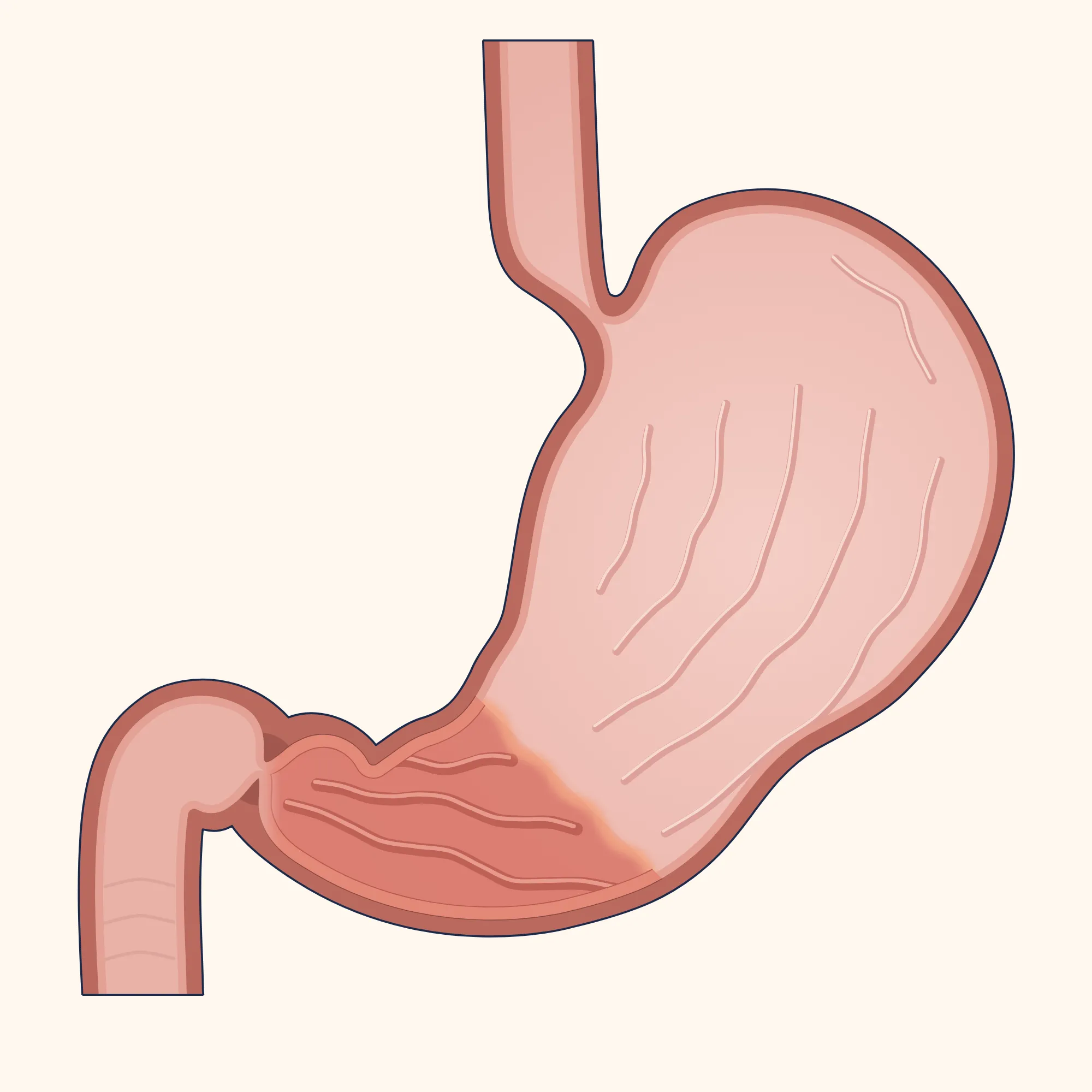
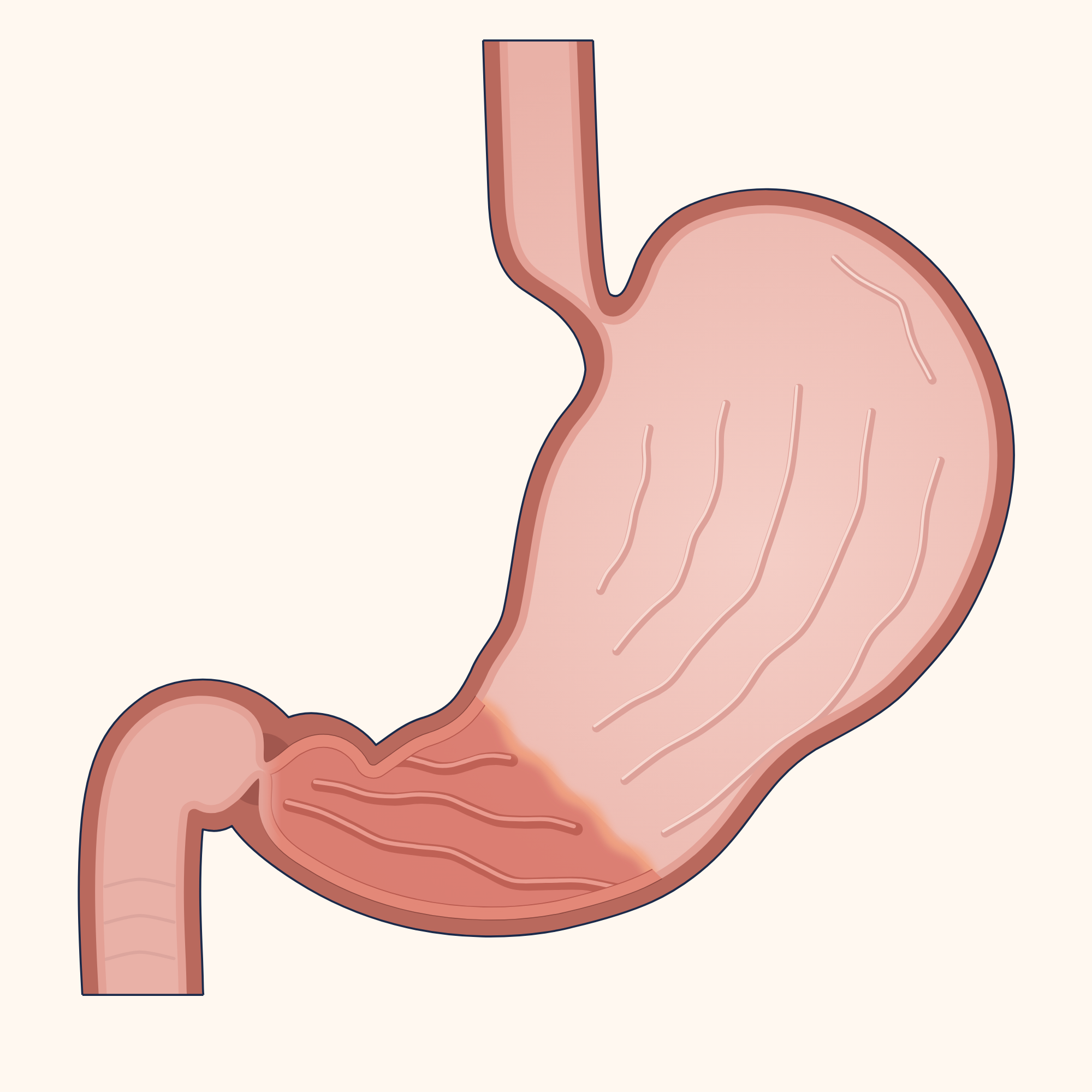

What is gastritis?
Gastritis is inflammation of the lining covering the inside of the stomach (mucosa)[1, 2]. When the stomach lining is damaged but there is little or no inflammation, this is called gastropathy[2]. Gastritis may start suddenly and last a short time (acute gastritis) or develop slowly and last a long time (chronic gastritis)[2]; some types cause superficial sores (erosions) and ulcers in the stomach lining[2].
To diagnose gastritis, small samples of tissue (a biopsy) may be taken from the stomach lining during gastroscopy and examined under a microscope[4]. Most people with gastritis have no symptoms[3]. Stomach pain and indigestion can have many causes other than gastritis[13, 14, 15]. Symptoms alone cannot reliably distinguish whether indigestion is caused by a functional problem or by a disease that can be detected in the organs[9].
Are gastritis and indigestion the same thing?
No. Indigestion (dyspepsia) is the name for a group of symptoms: pain or burning in the upper middle part of the abdomen, feeling full quickly after starting a meal, and uncomfortable fullness after eating[9]. Belching, nausea or bloating in the upper abdomen may also occur[9]. Burning in the chest alone is not considered a symptom of indigestion, but it can occur alongside indigestion; burning that spreads into the chest is more suggestive of reflux (stomach contents flowing back into the oesophagus)[9]. Vomiting is not an expected symptom of indigestion; if present, it should be assessed for another disease[9]. Gastritis can cause symptoms of indigestion[3]. Indigestion can also be caused by acid flowing up from the stomach (reflux), stomach ulcers, some medicines, smoking, excess weight, stress and anxiety; less often, it can be a symptom of stomach cancer[13]. Population studies suggest that about 8 in 10 people with indigestion have functional indigestion[9]. This diagnosis is based on the characteristics of the symptoms and the absence of a disease to explain them in the necessary investigations; a normal-looking gastroscopy alone does not establish the diagnosis[9]. The British Society of Gastroenterology defines functional indigestion as a common condition in which communication between the gut and the brain is disrupted[9].
What causes gastritis?
Causes of gastritis and damage to the stomach lining with little inflammation (gastropathy) include[2, 3]:
- infection caused by a bacterium called Helicobacter pylori (H. pylori for short, commonly known as the “stomach bacterium”)[1, 3],
- anti-inflammatory painkillers such as ibuprofen, and aspirin[1, 3],
- excess alcohol[1, 3],
- conditions that put severe strain on the body, such as a serious injury, burn or severe illness (stress gastritis)[1, 3],
- operations in which part of the stomach is removed (for example, some obesity operations): these can cause bile to flow back from the small intestine into the stomach[1, 3],
- the immune system attacking the stomach lining (autoimmune gastritis)[1, 3].
Less common causes include coeliac disease, chemotherapy and radiotherapy, diseases that cause inflammation in the digestive tract such as Crohn’s disease, food allergies, and other infections seen mostly in people with weakened immunity[3].
Gastritis caused by H. pylori is the most common type of gastritis[2]. According to NIDDK, about half the world’s population has H. pylori, and the bacterium is usually acquired in childhood[2]. Almost everyone carrying the bacterium develops long-term (chronic) gastritis[2]; the bacterium can cause indigestion, stomach ulcers and stomach cancer[10]. How it spreads is still being studied: it may spread through contact with the vomit, stool or saliva of someone carrying the bacterium, or through food or water contaminated with these[3].
According to researchers, eating and drinking are not an important cause of most types of gastritis[6]. Even so, too much alcohol can cause sudden damage to the stomach lining, while food allergies and, rarely, iron medicines can cause gastritis[6].
What are the symptoms of gastritis?
Gastritis causes no symptoms in most people[3]. If symptoms occur, they may include:
- pain or discomfort in the upper abdomen, indigestion[1, 3],
- nausea or vomiting[1, 3],
- feeling full quickly at the start of a meal, excessive fullness or bloating after a meal[1, 3],
- loss of appetite and weight loss[1, 3].
If gastritis causes sores in the stomach lining, the stomach may bleed[3]. Signs of stomach bleeding may include: black, tar-like stools or red or dark red blood in the stool; vomiting blood or vomit that looks like coffee grounds; abdominal cramps or pain; tiredness, shortness of breath or dizziness[3]. If you have these symptoms, get medical help immediately[3]. A small bleed may not be visible in the stool[3]. Gastritis caused by H. pylori and autoimmune gastritis can interfere with the absorption of iron from food, leading to anaemia[2].
When should you see a doctor about gastritis pain?
See a doctor if your indigestion lasts more than 1 week[1]. Also see a doctor if your indigestion keeps coming back or you have iron deficiency anaemia[13]. Ask a doctor for an urgent appointment for prompt assessment if your abdominal pain does not go away, comes back or gets much worse; if you have persistent or recurrent bloating alongside abdominal pain; or if you are pregnant and have abdominal pain[15].
Ask a doctor for an urgent appointment for prompt assessment if, alongside your gastritis symptoms, you have lost your appetite, feel full after eating very little, have lost weight without trying, feel as though you have a lump in your abdomen, find swallowing painful or difficult, or have vomiting that does not go away: these can be serious and need to be checked quickly[1].
See a doctor without delay if you have difficulty swallowing, or if you are 55 or over and are losing weight alongside indigestion, reflux or pain in the upper abdomen: British guidelines call for prompt investigation for oesophageal and stomach cancer in these situations[8, 9]. Gastroscopy may also be considered in people aged 55 or over who have indigestion that does not go away despite treatment, or anaemia alongside upper abdominal pain[8]. The age threshold is lower for some people: the British Society of Gastroenterology recommends prompt gastroscopy for people over 40 with indigestion who have a family history of oesophageal or stomach cancer or who are from a region with a high risk of stomach cancer[9]. These age thresholds come from British guidelines; being younger does not mean you will not need an investigation: the same guideline also states that a doctor may consider gastroscopy necessary based on their own assessment[9].
How is gastritis diagnosed and what tests are done?
Your doctor will ask about your symptoms, past illnesses and medicines you take, and examine you[4]. The following tests may be requested to find the cause of gastritis:
- Breath test: you drink a special drink, then your breath is tested for H. pylori[1, 4].
- Stool test: a stool sample may be checked for H. pylori and blood that cannot be seen with the naked eye[1, 4].
- Blood test: this may be requested to look for other causes of gastritis or its effects, such as anaemia[1, 2, 4].
Proton pump inhibitors (a group of medicines that reduce stomach acid) can cause a false-negative breath or stool test result[11]; the British guideline recommends a 2-week break from these medicines before these tests[7]. Plan the test date and breaks from medicines with your doctor; do not stop your medicine on your own.
A gastroscopy may be performed to show gastritis, find its cause and treat the problems it causes[4]: a thin, flexible tube with a camera at its tip is used to look inside the stomach, and small samples of tissue are taken from the stomach lining and examined under a microscope[4]. Most people with indigestion do not need a gastroscopy straight away[9]. If your doctor assesses your warning signs and personal risks and decides that prompt gastroscopy is not needed, the British Society of Gastroenterology recommends first testing for H. pylori with a breath or stool test and treating it if the bacterium is present[9].
How does gastritis get better and what is the treatment?
Treatment is chosen according to the type and cause of gastritis[1, 5]. Treatment can reduce symptoms and lower the chance of problems[5]; untreated gastritis can get worse and cause a stomach ulcer[1].
If you have H. pylori: Guidelines recommend that everyone who has the germ be treated[11, 12]. Several medicines are used together to get rid of the germ; these are usually two or more antibiotics and a medicine that reduces stomach acid[5]. Your doctor may not choose antibiotics you have taken before, because the germ may be resistant[5]. Take all doses of the medicines as your doctor tells you: if you stop the medicine early, some germs may survive, the infection may continue and the germ may become resistant to antibiotics[5]. Smoking also reduces the effectiveness of this treatment[16].
The American College of Gastroenterology's 2024 guideline recommends testing everyone who has been treated to check whether the germ has gone[10, 11]. This check is done with a breath, stool or biopsy test at least 4 weeks after the medicines have been completed[5, 11]. To prevent a falsely negative result, the same guideline calls for a 2-week break from proton pump inhibitors and a 4-week break from antibiotics and bismuth (a medicine used in some treatments) before the test[11]. Plan the follow-up test, its date and the breaks from medicines with your doctor; do not stop your medicine on your own. If the germ is still present, your doctor may give you a new treatment with different medicines[5].
If you take painkillers or aspirin: Talk to your doctor about stopping anti-inflammatory painkillers such as ibuprofen or aspirin and, if possible, trying another medicine[1]. Your doctor may suggest that you stop this medicine, reduce its dose or switch to another painkiller; they may also suggest a medicine to reduce stomach acid alongside the painkiller[5].
If alcohol is the cause: you may need to stop drinking alcohol[1].
For symptoms: Medicines that reduce stomach acid or prevent acid from irritating the stomach and oesophagus may be used (antacids, alginates, proton pump inhibitors)[1]. For mild indigestion, your pharmacist may also recommend some of these medicines; read the instructions for use because some are taken after meals and others before meals[1].
In autoimmune gastritis: absorption of iron and vitamin B12 from food may be impaired and anaemia may develop; the anaemia caused by vitamin B12 deficiency that this condition can cause is called pernicious anaemia[2]. Your doctor may recommend iron, folic acid and vitamin B12 supplements; if pernicious anaemia develops, they may recommend vitamin B12 injections[5].
If sores in the stomach lining cause severe bleeding, the bleeding can be stopped with gastroscopy or, in severe cases, surgery[5].
How many days does gastritis take to clear up?
The sources on this page do not give a recovery time for gastritis; treatment varies according to the type and cause of gastritis[5]. See a doctor if your indigestion lasts longer than 1 week[1] or keeps coming back[13]; if your abdominal pain does not go away, comes back or gets much worse, ask your doctor for an urgent appointment for prompt assessment[15].
Can gastritis turn into cancer?
If gastritis caused by H. pylori is not treated, it can last a lifetime and increases the likelihood of stomach cancer[2]. If this gastritis or autoimmune gastritis lasts a long time, the glands in the stomach lining may be lost (atrophic gastritis); this is also associated with stomach cancer[2]. Treatment of H. pylori reduces the risk of types of stomach cancer linked to the germ[16]. Having one or more risk factors does not mean you will develop cancer; many people with risk factors never develop stomach cancer[16].
What should you eat and avoid if you have gastritis?
The sources on this page do not identify a special diet that has been shown to heal gastritis. Diet is not an important cause of most types of gastritis[6]; the British Society of Gastroenterology also states that there is insufficient evidence to recommend a dietary treatment for functional indigestion[9]. If you have been diagnosed with gastritis, first follow the treatment your doctor recommends; the following may help relieve symptoms[1]:
- Cut down on caffeinated drinks such as tea, coffee, cola and energy drinks[1].
- Lose weight if you are overweight[1].
- Do not eat within the 3–4 hours before going to bed[1].
- Do not drink alcohol or smoke[1].
- Talk to your doctor if you regularly take anti-inflammatory painkillers or aspirin[1].
Examples of factors that can trigger or worsen indigestion include smoking, alcohol, coffee, chocolate, tomatoes, fatty or spicy foods and excess weight[7, 13]. Cut down as much as possible on, or avoid, foods and drinks you notice trigger your symptoms[7]. Do not restrict your diet more than necessary: this can lead to inadequate nutrition or disordered eating habits[9]. Raising the head of the bed and eating the evening meal well before bedtime may help some people[7]. Regular aerobic exercise (movement that speeds up breathing, such as walking or cycling) is recommended for functional indigestion[9].
If gastritis is associated with coeliac disease or a food allergy, your doctor may recommend a change in diet[5]. Talk to your doctor before using supplements such as vitamins or herbal or alternative products[5, 6].
Which department treats gastritis?
Your family doctor may carry out the initial assessment for gastritis symptoms; if gastritis does not improve or causes severe symptoms, they may refer you to a gastroenterology specialist, who may perform a gastroscopy to look inside the stomach[1]. More about gastroscopy: gastroscopy page.
Sources
16
- NHS (National Health Service of England). Gastritis (gastritis): patient information page. Last reviewed: 5 August 2026. Text: www.nhs.uk.
- National Institute of Diabetes and Digestive and Kidney Diseases (NIDDK; US National Institutes of Health). Definition & Facts for Gastritis & Gastropathy (gastritis and gastropathy: definition): patient information page. Last reviewed: August 2019. Text: www.niddk.nih.gov.
- NIDDK. Symptoms & Causes of Gastritis & Gastropathy (symptoms and causes): patient information page. Last reviewed: August 2019. Text: www.niddk.nih.gov.
- NIDDK. Diagnosis of Gastritis & Gastropathy (diagnosis): patient information page. Last reviewed: August 2019. Text: www.niddk.nih.gov.
- NIDDK. Treatment of Gastritis & Gastropathy (treatment): patient information page. Last reviewed: August 2019. Text: www.niddk.nih.gov.
- NIDDK. Eating, Diet, & Nutrition for Gastritis & Gastropathy (nutrition): patient information page. Last reviewed: August 2019. Text: www.niddk.nih.gov.
- National Institute for Health and Care Excellence (NICE). Gastro-oesophageal reflux disease and dyspepsia in adults: investigation and management (CG184). Published: 3 September 2014; last updated: 18 October 2019. Text: www.nice.org.uk.
- National Institute for Health and Care Excellence (NICE). Suspected cancer: recognition and referral (NG12). Published: 23 June 2015; last updated: 15 April 2026. Text: www.nice.org.uk.
- Black CJ, Paine PA, Agrawal A, Aziz I, Eugenicos MP, Houghton LA, et al. British Society of Gastroenterology guidelines on the management of functional dyspepsia. Gut. 2022;71(9):1697–1723. doi: 10.1136/gutjnl-2022-327737. PubMed: 35798375.
- Chey WD, Howden CW, Moss SF, Morgan DR, Greer KB, Grover S, et al. ACG Clinical Guideline: Treatment of Helicobacter pylori Infection. Am J Gastroenterol. 2024;119(9):1730–1753. (Information taken from the article's abstract; the full text could not be accessed.) doi: 10.14309/ajg.0000000000002968. PubMed: 39626064.
- American College of Gastroenterology (American College of Gastroenterology). ACG Guideline Highlights: Treatment of Helicobacter pylori Infection. The association's own one-page summary of the 2024 guideline in Source 10. Text: mediacdn.gi.org.
- Malfertheiner P, Megraud F, Rokkas T, Gisbert JP, Liou JM, Schulz C, et al. Management of Helicobacter pylori infection: the Maastricht VI/Florence consensus report. Gut. 2022;71(9):1724–1762. (Information taken from the article's abstract; the full text could not be accessed.) doi: 10.1136/gutjnl-2022-327745. PubMed: 35944925.
- NHS (National Health Service of England). Indigestion (indigestion): patient information page. Last reviewed: 5 May 2023 (the next review date of 5 May 2026 has passed). Text: www.nhs.uk.
- NHS (National Health Service of England). Stomach ulcer (stomach ulcer): patient information page. Last reviewed: 12 August 2025. Text: www.nhs.uk.
- NHS (National Health Service of England). Stomach ache (abdominal pain): patient information page. Last reviewed: 26 May 2023 (the next review date of 26 May 2026 has passed). Text: www.nhs.uk.
- National Cancer Institute (NCI; US National Cancer Institute). Stomach Cancer Causes and Risk Factors (causes and risk factors for stomach cancer). Updated: 8 May 2025. Text: www.cancer.gov.
Medical review of the Turkish original: Op. Dr. Ömer Seyfullah Hasıripi, . This page is a translation checked by AI reviewers; the Turkish version prevails.
This page is for general information; it does not replace an examination. See a doctor about your symptoms.