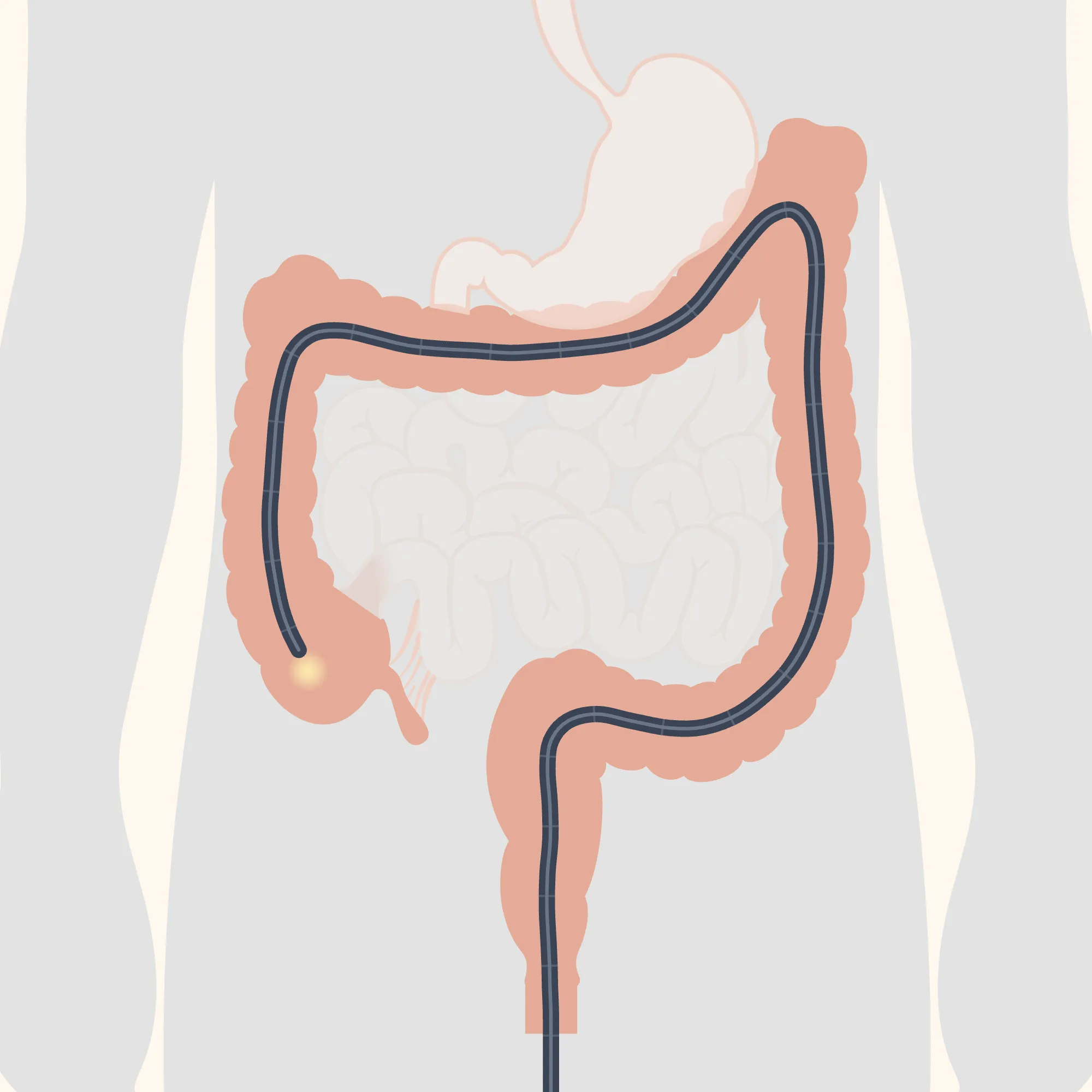
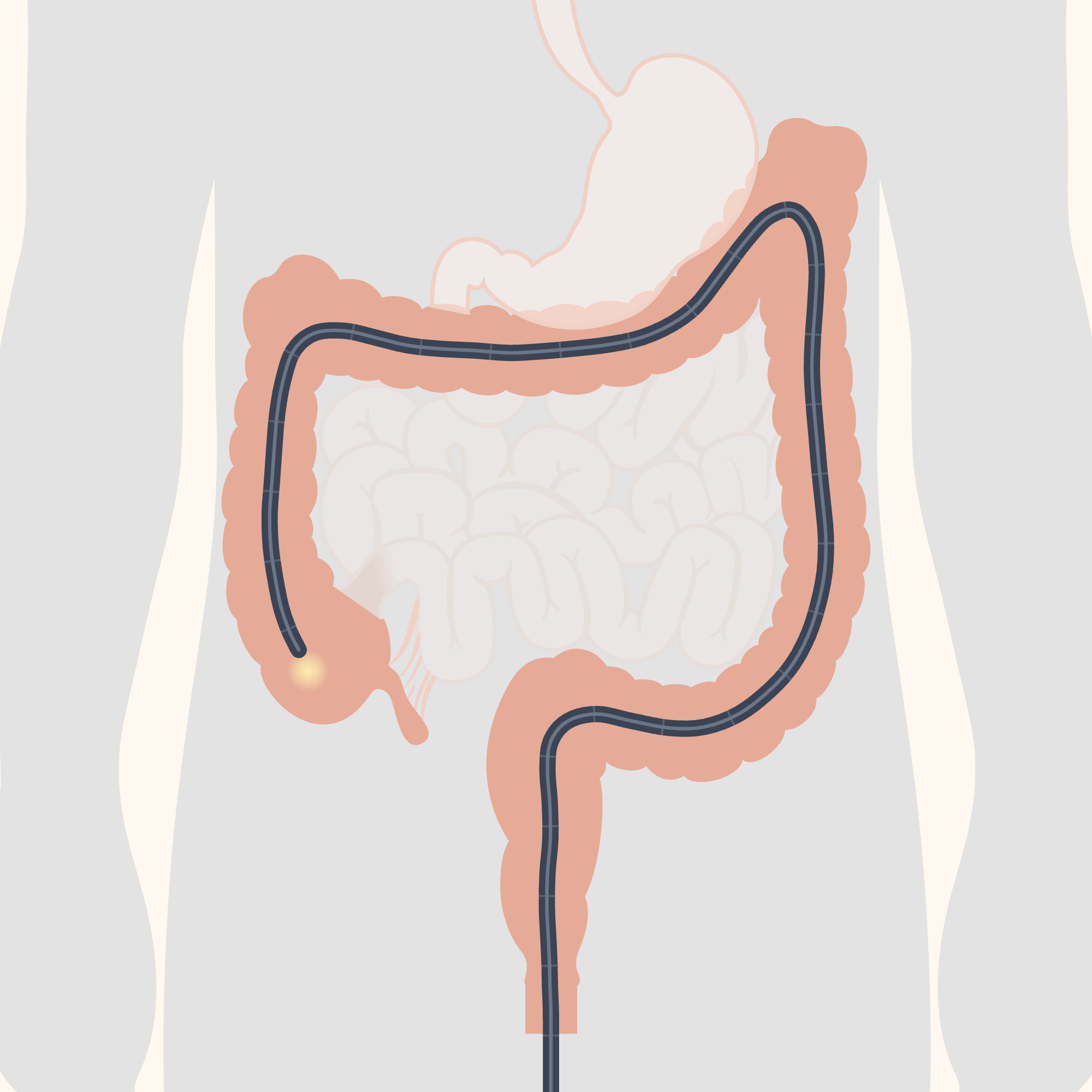

What is a colonoscopy and why is it done?
During a colonoscopy, the thin tube is advanced along the entire large bowel and the camera in the tube shows the bowel's inner surface[1, 4]. Colonoscopy is done for large bowel cancer screening, when a screening test such as a stool test gives an abnormal result, to investigate digestive symptoms, and for follow-up after treatment for a polyp or large bowel cancer[4, 5]. Finding and removing adenoma-type polyps, the main precursors of large bowel cancer, is considered a fundamental part of preventing this cancer[6].
In Turkey, the Turkish Ministry of Health's screening programme for large bowel (colorectal) cancer provides a stool test for hidden blood every 2 years and a colonoscopy every 10 years for men and women aged 50–70[7]. Tell your doctor if your mother, father, sibling or child has had large bowel cancer or an advanced polyp (advanced adenoma), or if there is a hereditary cancer syndrome such as Lynch syndrome in your family; screening may start earlier[4, 8]. If there is no hereditary syndrome, the American guideline recommends colonoscopy every 5 years, starting at age 40 or 10 years before the youngest age at diagnosis, whichever is earlier, if cancer or an advanced polyp confirmed by a report was found in one of these close relatives before age 60 or in two of them at any age[4, 8]. If you have a symptom such as bleeding from the anus, see a doctor without waiting until screening age[4, 8].
Which department deals with colonoscopy?
The general surgery and gastroenterology (digestive system diseases) departments deal with colonoscopy. Your family doctor or workplace doctor may carry out the initial assessment and, if they consider it necessary, refer you to the appropriate department.
What should you eat before a colonoscopy?
For your diet, follow the written preparation sheet you were given; the information below explains the guidelines' general recommendations.
The European guideline recommends a low-fibre diet on the day before the procedure[9]. In studies, this diet allowed some fresh fruit with the skin and seeds removed and cooked vegetables (such as apples and carrots), cheese, meat, fish and white bread[9]. Wholegrain bread, muesli, brown rice and some fruit and vegetables such as oranges and mushrooms were not allowed[9]. A randomised study showed that, in patients who drank the bowel preparation medicine in two parts, a diet lasting several days had no additional benefit over a one-day diet[9].
The patient page from the NHS, England's national health service, recommends plain foods for the 2 days before the procedure[1]. Examples include chicken without sauce, white rice, pasta or white bread, and clear soup[1]. Because the sources differ on the number of days, the list your unit gives you determines how many days you should follow the diet and which foods, such as yoghurt or milk, are allowed[1, 9].
How do you prepare for a colonoscopy?
If the bowel is not well cleaned, the examination is less accurate, important findings may be missed and the colonoscopy needs to be repeated[9]. If you do not drink the bowel preparation medicine as instructed, the procedure may not be possible[1].
The written preparation sheet Dr. Hasıripi gives his patients contains two methods. Follow only the method your doctor has marked; do not use both methods together. If you do not have a preparation sheet or no method has been marked, call 444 44 84 before starting the preparation.
- Method 1: Medicine in sachets (sodium picosulfate and magnesium citrate) and an enema. The diet starts 2 days before the procedure.
- Method 2: 4 litres of prepared bowel preparation medicine (polyethylene glycol). The diet starts the day before the procedure.
The times, amounts, fluid instructions and warnings are written on your sheet. The sheet and your doctor's instructions take precedence. If you have kidney or heart failure or are on a fluid restriction, tell the team before starting the preparation.
The guideline information below does not replace the preparation plan you were given. Do not change the medicine times or the time to stop drinking fluids on your sheet yourself.
The European guideline recommends drinking part of the preparation medicine the evening before a planned colonoscopy and the rest on the day of the procedure (split dose)[9]. For afternoon procedures, drinking all of the medicine on the same day is also an acceptable option[9]. According to the European guideline, the final portion should be started no more than 5 hours before the procedure and finished at least 2 hours before it[9]. Guidelines recommend stopping clear fluids at least 2 hours before procedures for which a sedative will be given[9]. Follow your preparation sheet for which fluids you can drink and when to stop. Your unit will tell you when to stop eating and drinking[1]. After starting the preparation medicine, stay at home, close to a toilet[1].
Different clinically validated high- or low-volume medicines may be used for bowel preparation[9]. Tell the unit if you have severe kidney or heart failure: some preparation medicines are not recommended in these conditions[9]. For people whose fluid and salt balance could be disturbed, the medicine is chosen individually[9]. According to the European guideline, an enema is not recommended as an additional part of routine preparation[9].
In some preparation plans, your doctor may also give you an enema. If you have been given an enema, follow the written instructions; do not use an additional enema on your own.
Should medicines be stopped before a colonoscopy?
If you are pregnant or take any medicine (for example, insulin or diabetes tablets), tell the unit as soon as you receive the instructions; bring your medicines with you on the day of the procedure[1]. For blood-thinning medicines, the plan depends on whether a polyp will be removed (polyp removal is considered high risk for bleeding) and why you take the medicine[10]. You should be told about the risk of a blood clot if you stop the medicine and the risk of bleeding if you continue it[10]. European and North American guidelines differ on which medicines to pause and how many days beforehand to stop them[10, 11]. Therefore, do not stop your medicine on your own; consult the unit and the doctor who prescribed it[1, 10].
If you take a GLP-1 medicine for diabetes or weight loss (for example, semaglutide), be sure to say so: because these medicines can slow stomach emptying, the sedative medicine plan is tailored to the individual[12]. Iron medicine taken by mouth is usually paused before bowel preparation because it can colour the stool and cause constipation; consult the unit or the prescribing doctor about this too[13].
During pregnancy, colonoscopy is considered only if there is a strong reason[9, 13]. If you are breastfeeding, ask the unit whether you need to pause breastfeeding[9, 14].
How is a colonoscopy performed, and will you be asleep?
Whether you will be asleep depends on the country and the unit: in the USA, colonoscopy is mostly performed with a sedative or anaesthesia; in England, the patient is mostly awake and is offered medicine to help them feel comfortable[1, 4]. You may be offered a painkiller, a sedative given into a vein (sedation), or a gas to breathe in (a mixture of nitrous oxide and oxygen); not every unit may offer all of these[1, 14]. The European guideline recommends propofol and midazolam as sedatives; propofol is the first choice when the country's resources and regulations allow it[12]. Colonoscopy without medicine is also an option, depending on your and your doctor's preferences; there is very weak evidence that performing a diagnostic colonoscopy without medicine does not adversely affect completion of the examination or the rate at which adenomas are found[12, 14]. After you have been informed, a decision about which medicine to use is made together[14].
During the procedure, a thin, flexible tube is inserted through the anus; you may feel it going in[1]. Air is introduced to open up the bowel, so you may feel bloated or have an urge to go to the toilet, and you may have abdominal cramps as the tube moves forward[1]. Polyps found may be removed during the same procedure, or a tissue sample may be taken for examination[1].
How long does a colonoscopy take?
What should you eat and be aware of after a colonoscopy?
Plan when and what to eat according to the discharge information your unit gives you[12]. Once you have recovered, you can usually eat and drink; you may prefer light foods that day and return to your normal diet the next day[12, 16]. Before going home, you are expected to have recovered and started eating and drinking again, and to have been given verbal and written discharge information[12]. This information should cover diet, returning to work, driving, and whom to call during and outside working hours if a problem arises[12, 14]. If it has not been given, you or the person with you should ask for it before leaving[12, 14].
According to the British guideline, if you have received a sedative or painkiller into a vein, do not drive a vehicle or ride a bicycle, operate machinery, sign official documents, make important decisions or drink alcohol for 24 hours[1, 14]. In this case, go home with an adult; have someone available who can support you for 24 hours[1, 12, 14].
Bloating or abdominal cramps for the first 2–3 hours, and a little blood in the stool or bleeding from the anus for a few days, are common[1]. If your blood thinner was paused, ask the unit when to restart it: if a polyp was removed, bleeding often occurs after the medicine is restarted[10, 11].
What happens if a polyp is found during colonoscopy?
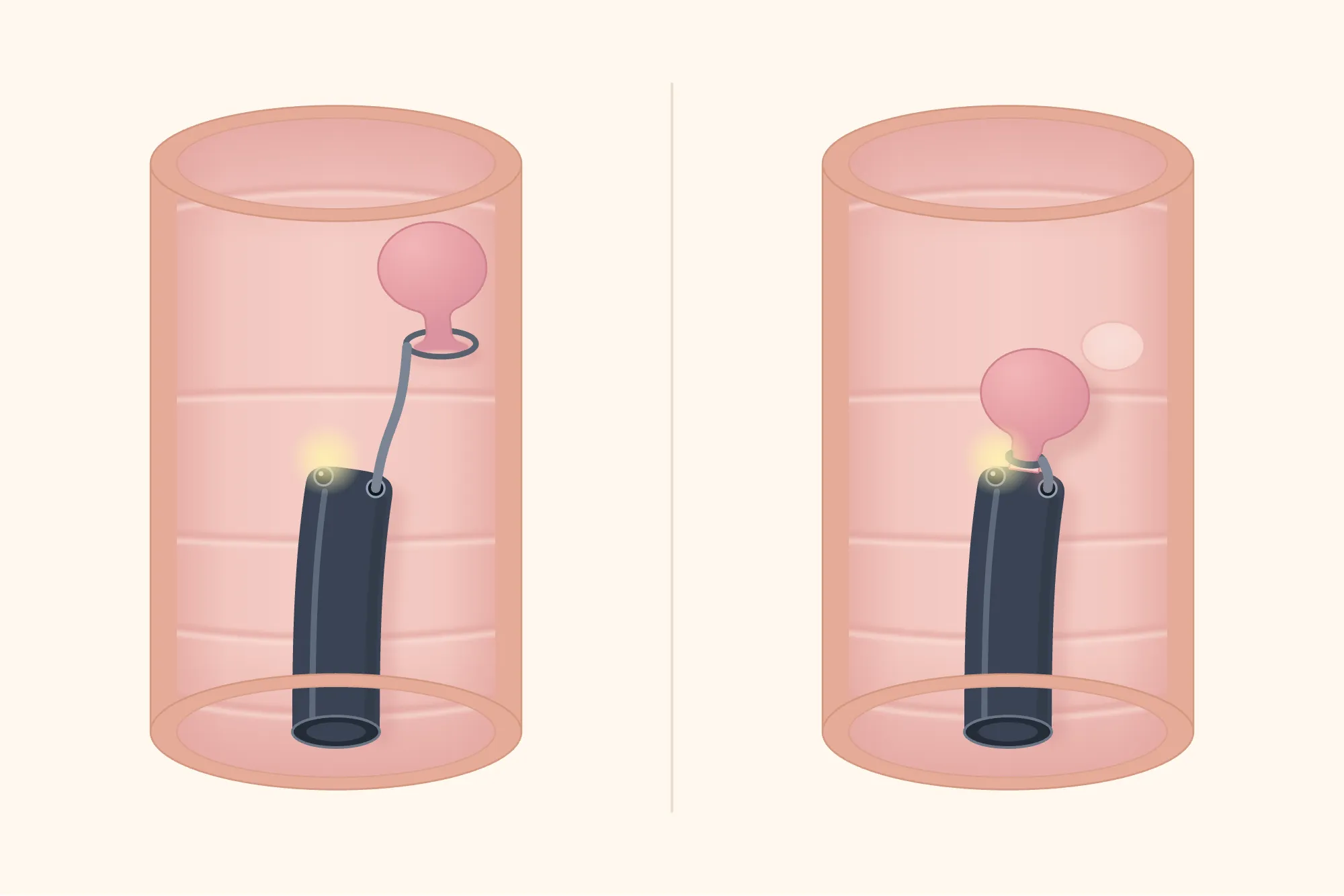
The European guideline recommends removing all polyps and examining them under a microscope, except those in the last part of the bowel (rectosigmoid) that are 5 mm or smaller and can be identified with high confidence as not being adenomas[3]. A polyp is usually removed by cutting it at its base with a thin wire loop passed through the tube; you will not feel this[1, 3]. In England, the result is usually communicated within 2–3 weeks; if you have not heard after 3 weeks, call the unit[1].
Enlarge
Swipe the drawing right or left to see the details. You can use the arrow keys on your keyboard.
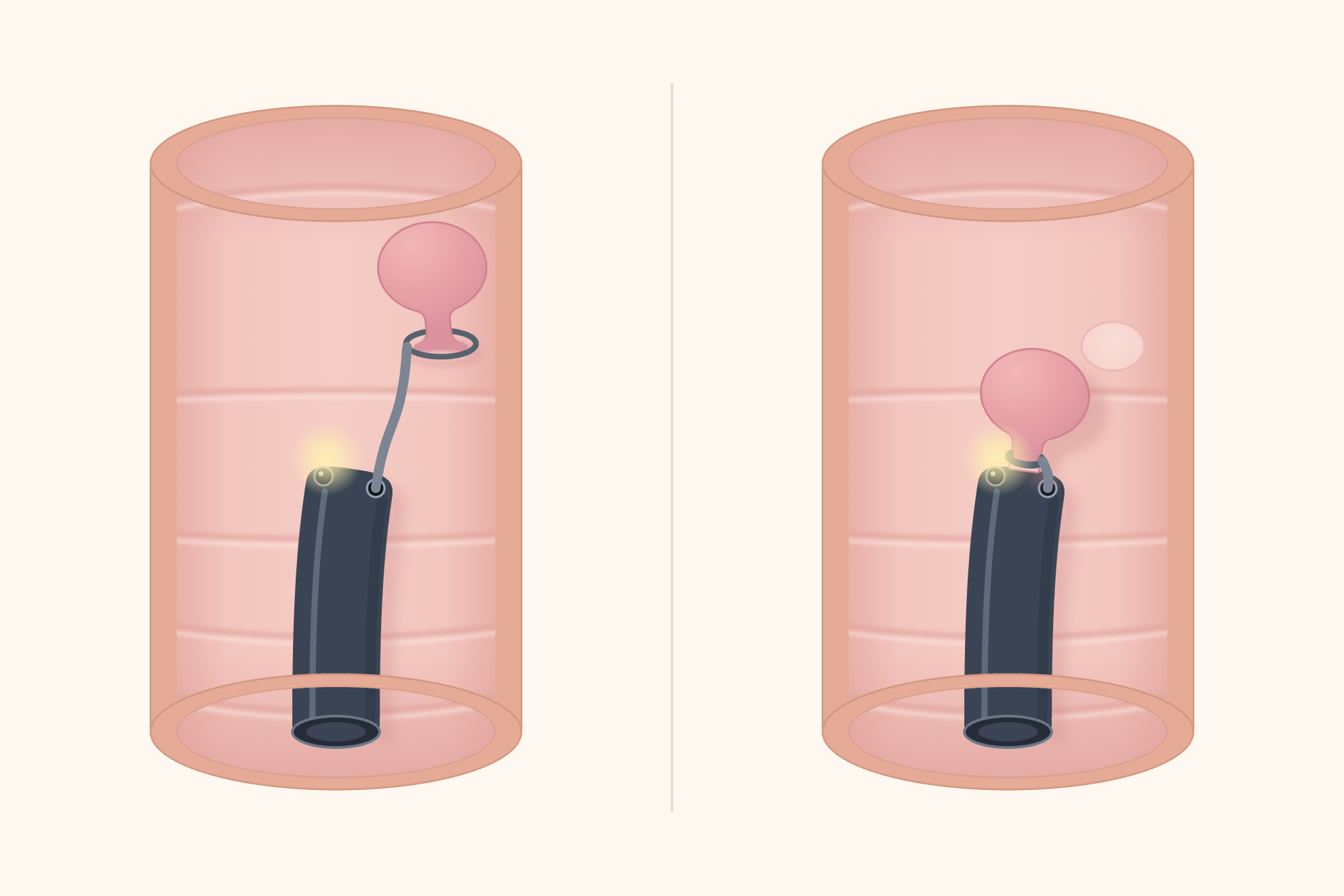
- 1 Polyp
- 2 Inner lining of the large bowel
- 3 Thin, flexible tube
- 4 Camera at the tip of the tube
- 5 Wire loop
- 6 Polyp cut off and removed
- 7 Site where the polyp was cut
Description of the drawing
The polyp is removed by cutting it at its base with a thin wire loop passed out through the tip of the tube. On the left, the loop is placed around the base of the polyp; on the right, the loop is closed, the polyp has been cut and is held at the tip of the tube, and a small, superficial area can be seen where the polyp was removed. The removed polyp is taken out for examination.
Results may vary from person to person with any surgical or interventional procedure. You are advised to discuss the procedure in detail with your doctor beforehand.
Illustrative drawing, not to scale. Source: Cancer Research UK / Wikimedia Commons, CC BY-SA 4.0. The colours and appearance of the tube (dark navy-grey body, pale yellow light) were taken from drawing C1; C1 is an adaptation of the Cancer Research UK CRUK 068 drawing. None of the source's lines were reused in this drawing: the section of bowel, tube, polyp, wire loop and flat mark were redrawn for this site; numbered labels were added. This drawing is also licensed under CC BY-SA 4.0.
Whether another colonoscopy is needed and when it should take place depend on the number and size of the polyps and the microscope results; the intervals recommended by European and American guidelines differ[5, 15]. The European guideline recommends that this decision be communicated to you in writing[15].
What are the risks of colonoscopy?
In screening colonoscopy, about 15 serious bleeds and 3 perforations (tears in the bowel) have been reported per 10,000 procedures[4]. The risk of bleeding and perforation is higher when a polyp is removed[2, 10]. Perforation is a rare but serious problem[2]. The risk of bleeding and perforation increases with age; people taking blood thinners have a higher risk of bleeding after the procedure[4, 10].
Preparation medicine may cause fluid loss or disturb the salt balance, especially in older people and those with other illnesses[4]; drink all the fluids specified in the instructions[9]. Problems related to sedative medicines are rare, mostly involve the heart and breathing (for example, a drop in blood oxygen or blood pressure), and their exact frequency in colonoscopy is unknown[4, 14]. Death attributable to colonoscopy itself has been estimated in large databases at 1 or fewer per 15,000 procedures[6]. As more than half of problems appear later, watch for the symptoms in the “When is it an emergency?” section in the days after the procedure too[6].
Sources
17
- NHS (United Kingdom National Health Service). Colonoscopy: patient information pages (general information, preparation, procedure day, results). Last reviewed: 14 November 2022. Text: www.nhs.uk.
- Paspatis GA, Arvanitakis M, Dumonceau JM, Barthet M, Saunders B, Turino SY, et al. Diagnosis and management of iatrogenic endoscopic perforations: European Society of Gastrointestinal Endoscopy (ESGE) Position Statement – Update 2020. Endoscopy. 2020;52(9):792–810. doi: 10.1055/a-1222-3191. PubMed: 32781470.
- Ferlitsch M, Hassan C, Bisschops R, Bhandari P, Dinis-Ribeiro M, Risio M, et al. Colorectal polypectomy and endoscopic mucosal resection: European Society of Gastrointestinal Endoscopy (ESGE) Guideline – Update 2024. Endoscopy. 2024;56(7):516–545. doi: 10.1055/a-2304-3219. PubMed: 38670139.
- US Preventive Services Task Force; Davidson KW, Barry MJ, Mangione CM, Cabana M, Caughey AB, Davis EM, et al. Screening for Colorectal Cancer: US Preventive Services Task Force Recommendation Statement. JAMA. 2021;325(19):1965–1977. doi: 10.1001/jama.2021.6238. PubMed: 34003218.
- Gupta S, Lieberman D, Anderson JC, Burke CA, Dominitz JA, Kaltenbach T, et al. Recommendations for Follow-Up After Colonoscopy and Polypectomy: A Consensus Update by the US Multi-Society Task Force on Colorectal Cancer. Gastroenterology. 2020;158(4):1131–1153.e5. (The authors' accepted manuscript was read; the journal's print version was not read.) doi: 10.1053/j.gastro.2019.10.026. PubMed: 32044092.
- Kaminski MF, Thomas-Gibson S, Bugajski M, Bretthauer M, Rees CJ, Dekker E, et al. Performance measures for lower gastrointestinal endoscopy: a European Society of Gastrointestinal Endoscopy (ESGE) Quality Improvement Initiative. Endoscopy. 2017;49(4):378–397. doi: 10.1055/s-0043-103411. PubMed: 28268235.
- Turkish Ministry of Health, General Directorate of Public Health, Department of Cancer. Kanser Taramaları (information page; no update date on the page). Text: hsgm.saglik.gov.tr.
- Rex DK, Boland CR, Dominitz JA, Giardiello FM, Johnson DA, Kaltenbach T, et al. Colorectal Cancer Screening: Recommendations for Physicians and Patients From the U.S. Multi-Society Task Force on Colorectal Cancer. Gastroenterology. 2017;153(1):307–323. (Only the abstract could be read.) doi: 10.1053/j.gastro.2017.05.013. PubMed: 28600072.
- Hassan C, East J, Radaelli F, Spada C, Benamouzig R, Bisschops R, et al. Bowel preparation for colonoscopy: European Society of Gastrointestinal Endoscopy (ESGE) Guideline – Update 2019. Endoscopy. 2019;51(8):775–794. doi: 10.1055/a-0959-0505. PubMed: 31295746.
- Veitch AM, Radaelli F, Alikhan R, Dumonceau JM, Eaton D, Jerrome J, et al. Endoscopy in patients on antiplatelet or anticoagulant therapy: British Society of Gastroenterology (BSG) and European Society of Gastrointestinal Endoscopy (ESGE) guideline update. Endoscopy. 2021;53(9):947–969. doi: 10.1055/a-1547-2282. PubMed: 34359080.
- Abraham NS, Barkun AN, Sauer BG, Douketis J, Laine L, Noseworthy PA, et al. American College of Gastroenterology-Canadian Association of Gastroenterology Clinical Practice Guideline: Management of Anticoagulants and Antiplatelets During Acute Gastrointestinal Bleeding and the Periendoscopic Period. Am J Gastroenterol. 2022;117(4):542–558. doi: 10.14309/ajg.0000000000001627. PubMed: 35297395.
- Triantafyllou K, Tziatzios G, Tham TC, Beilenhoff U, Lorenzo-Zúñiga V, Pouw RE, et al. Sedation for gastrointestinal endoscopy: European Society of Gastrointestinal Endoscopy (ESGE) and European Society of Gastroenterology and Endoscopy Nurses and Associates (ESGENA) Guideline. Endoscopy. 2026;58(10):1142–1179. doi: 10.1055/a-2898-6540. PubMed: 42480549.
- Snook J, Bhala N, Beales ILP, Cannings D, Kightley C, Logan RP, et al. British Society of Gastroenterology guidelines for the management of iron deficiency anaemia in adults. Gut. 2021;70(11):2030–2051. doi: 10.1136/gutjnl-2021-325210. PubMed: 34497146.
- Sidhu R, Turnbull D, Haboubi H, Leeds JS, Healey C, Hebbar S, et al. British Society of Gastroenterology guidelines on sedation in gastrointestinal endoscopy. Gut. 2024;73(2):219–245. (The correction in the same journal, 2024;73(3):e6, could not be read.) doi: 10.1136/gutjnl-2023-330396. PubMed: 37816587.
- Hassan C, Antonelli G, Dumonceau JM, Regula J, Bretthauer M, Chaussade S, et al. Post-polypectomy colonoscopy surveillance: European Society of Gastrointestinal Endoscopy (ESGE) Guideline – Update 2020. Endoscopy. 2020;52(8):687–700. doi: 10.1055/a-1185-3109. PubMed: 32572858.
- The Dudley Group NHS Foundation Trust (England). Results and advice after bowel cancer screening colonoscopy (results and advice after screening colonoscopy): patient leaflet, DGH/PIL/00907, version 2. Reviewed: June 2026. Accessed: 29 September 2026. Text: www.dgft.nhs.uk.
- National Institute of Diabetes and Digestive and Kidney Diseases (NIDDK, USA). Colonoscopy (colonoscopy): official patient information page. Last reviewed: August 2023. Full text; accessed 4 October 2026. Text: www.niddk.nih.gov.
Medical review of the Turkish original: Op. Dr. Ömer Seyfullah Hasıripi, . This page is a translation checked by AI reviewers; the Turkish version prevails.
This page is for general information; it does not replace an examination. See a doctor about your symptoms.