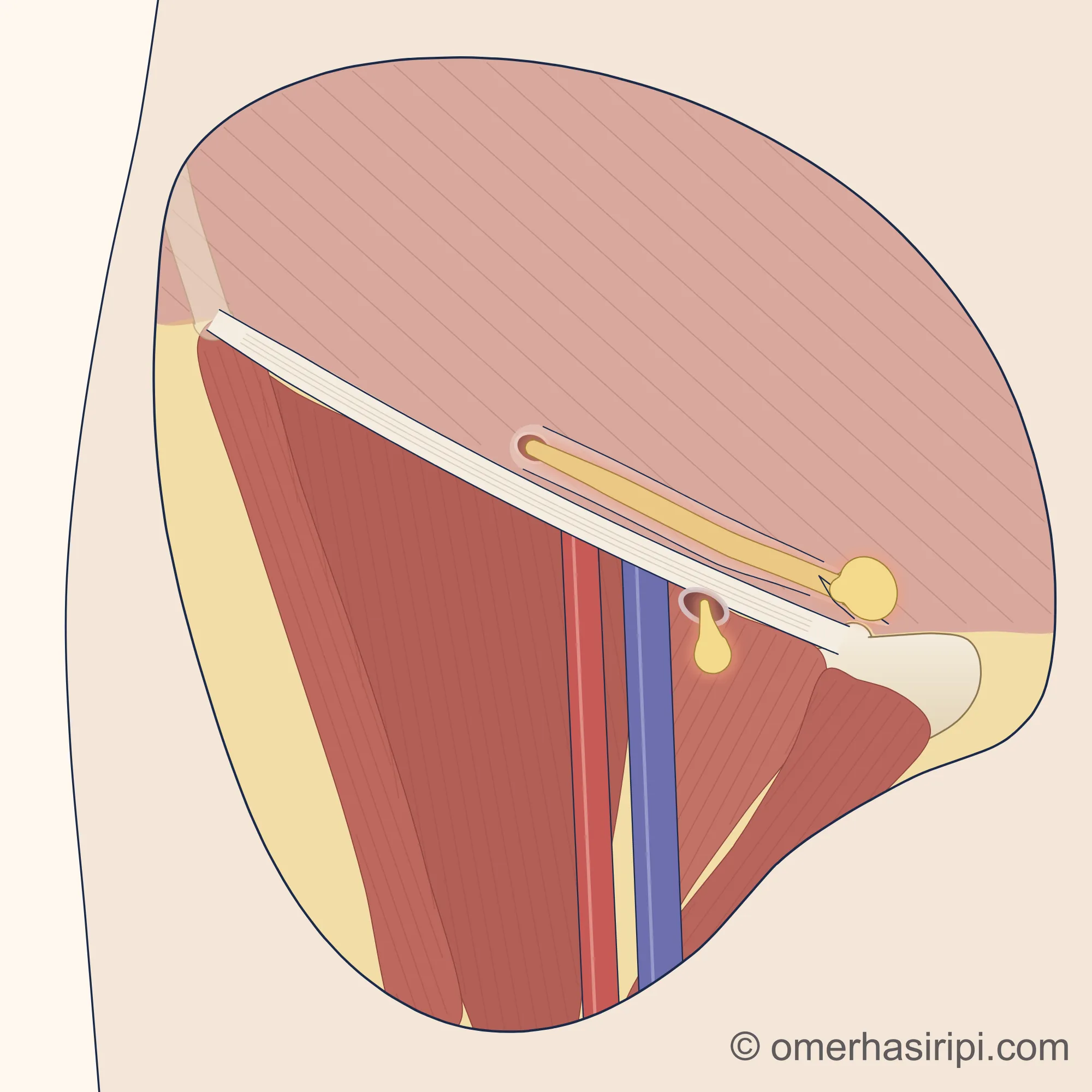
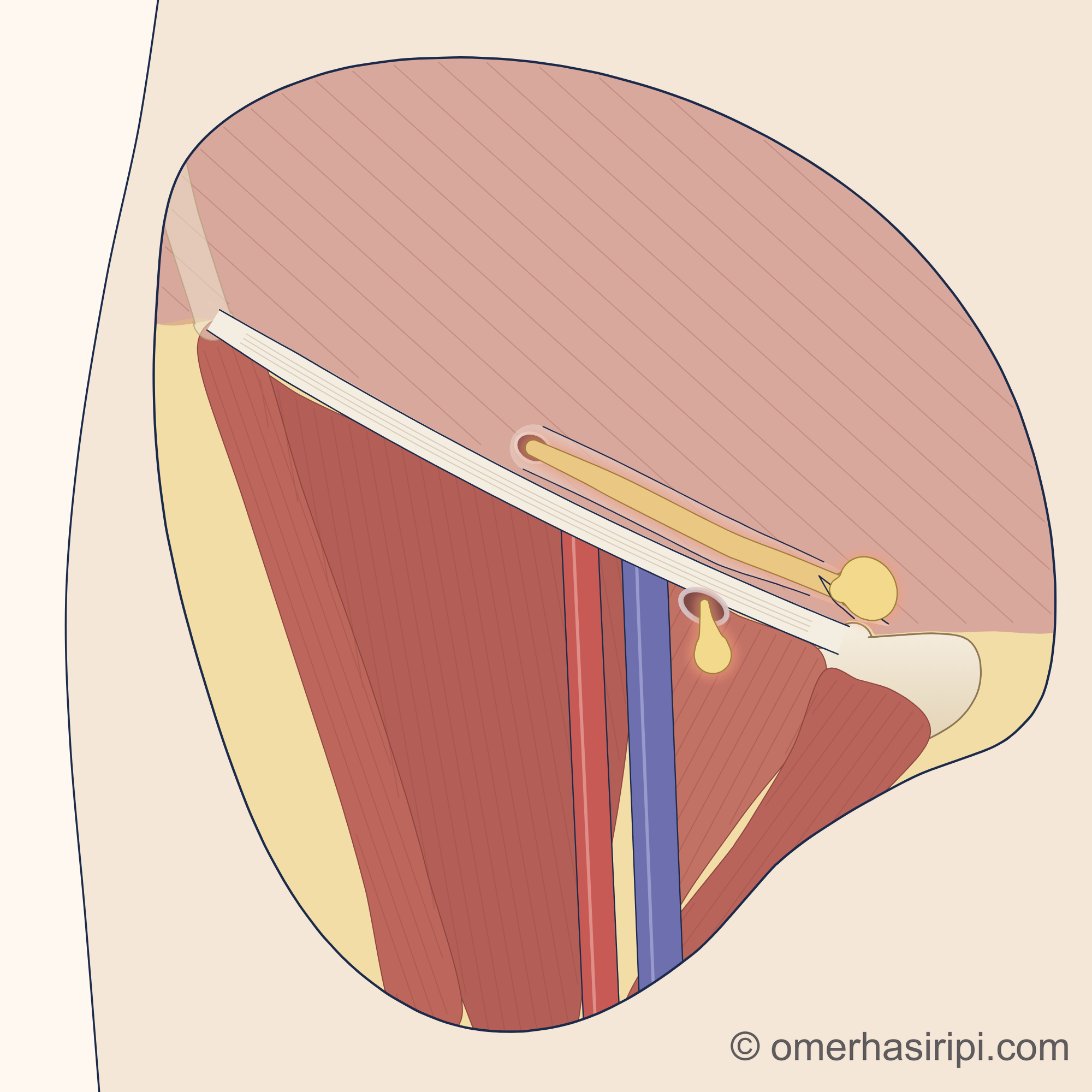
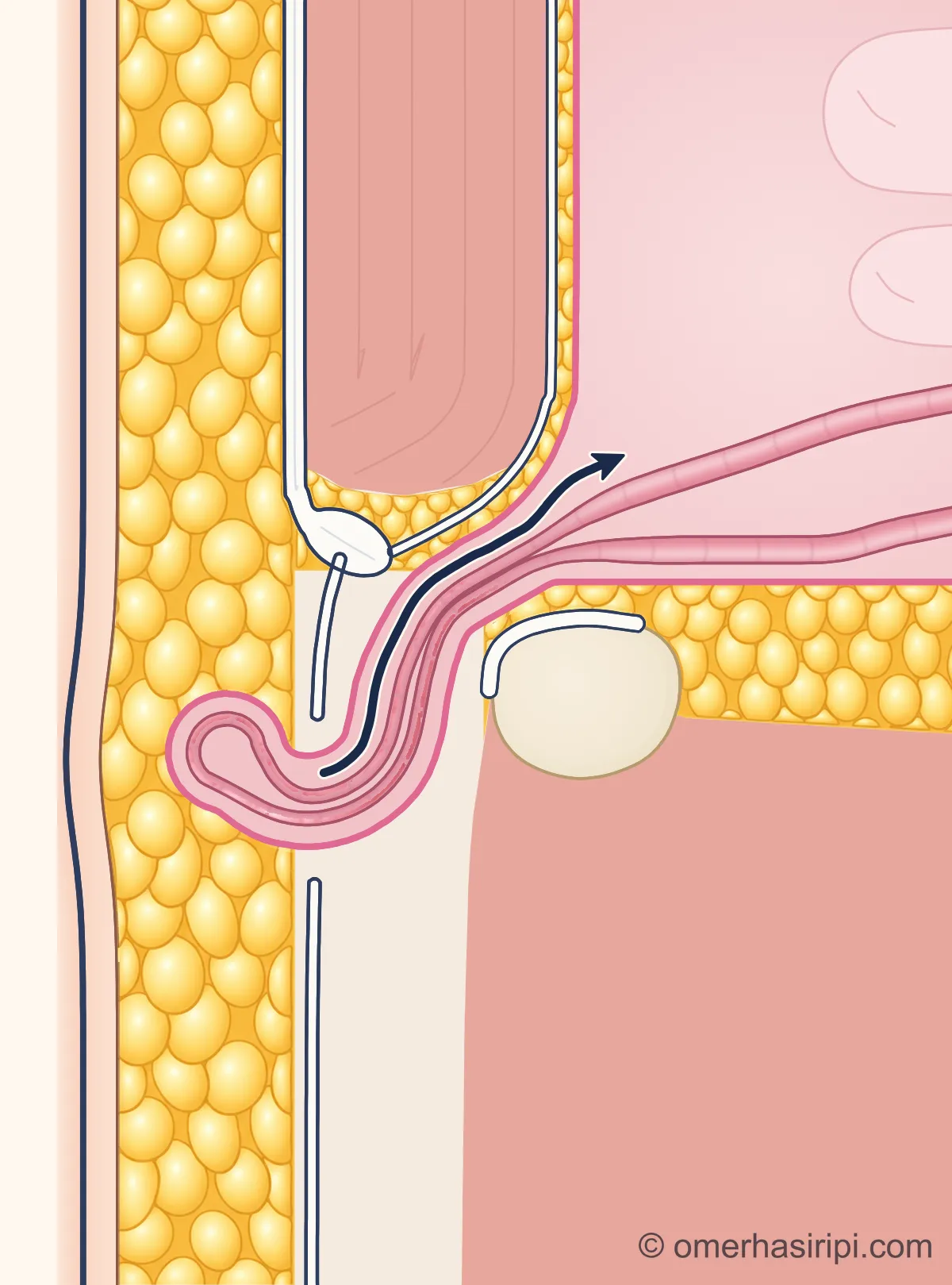
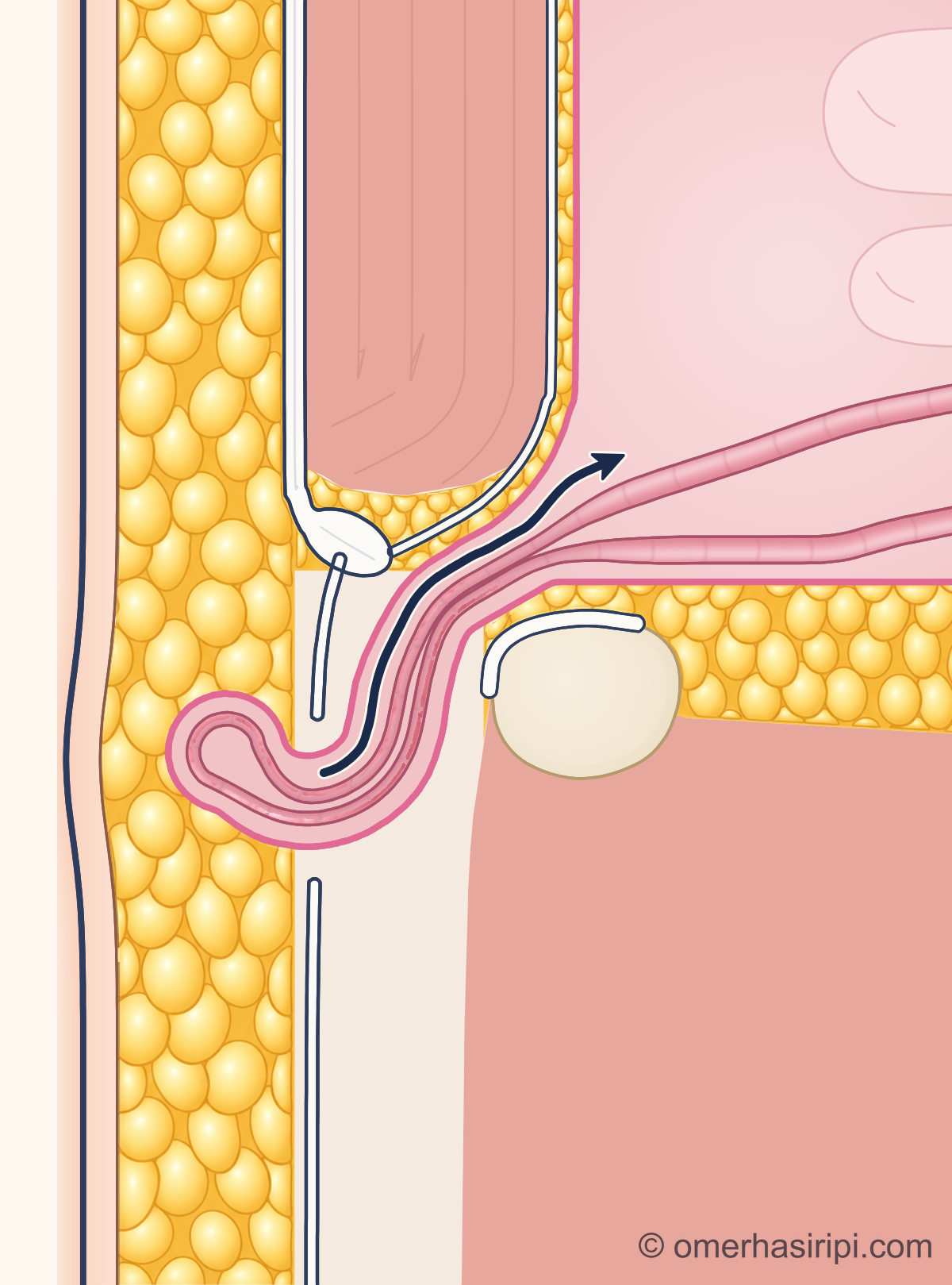
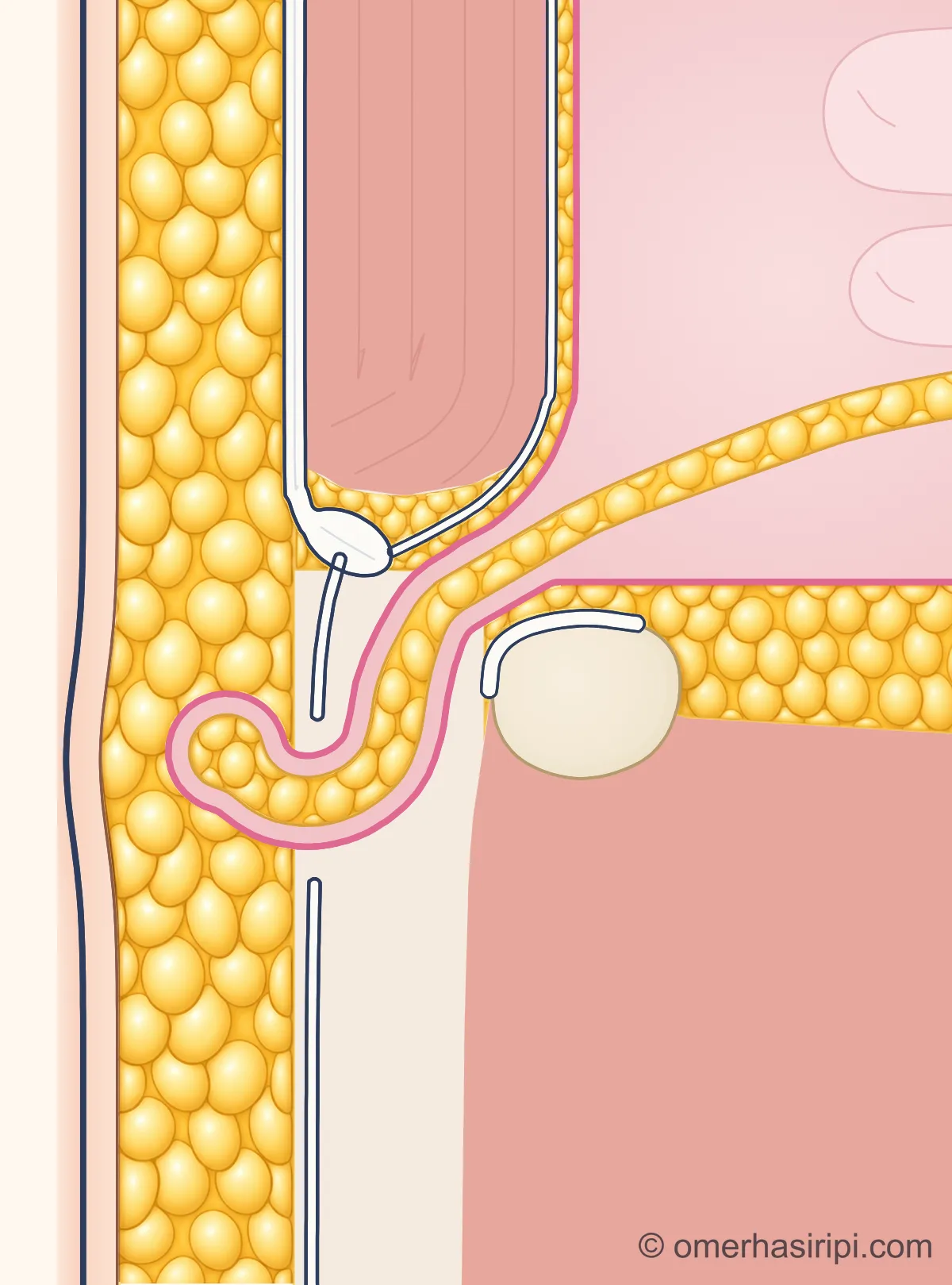
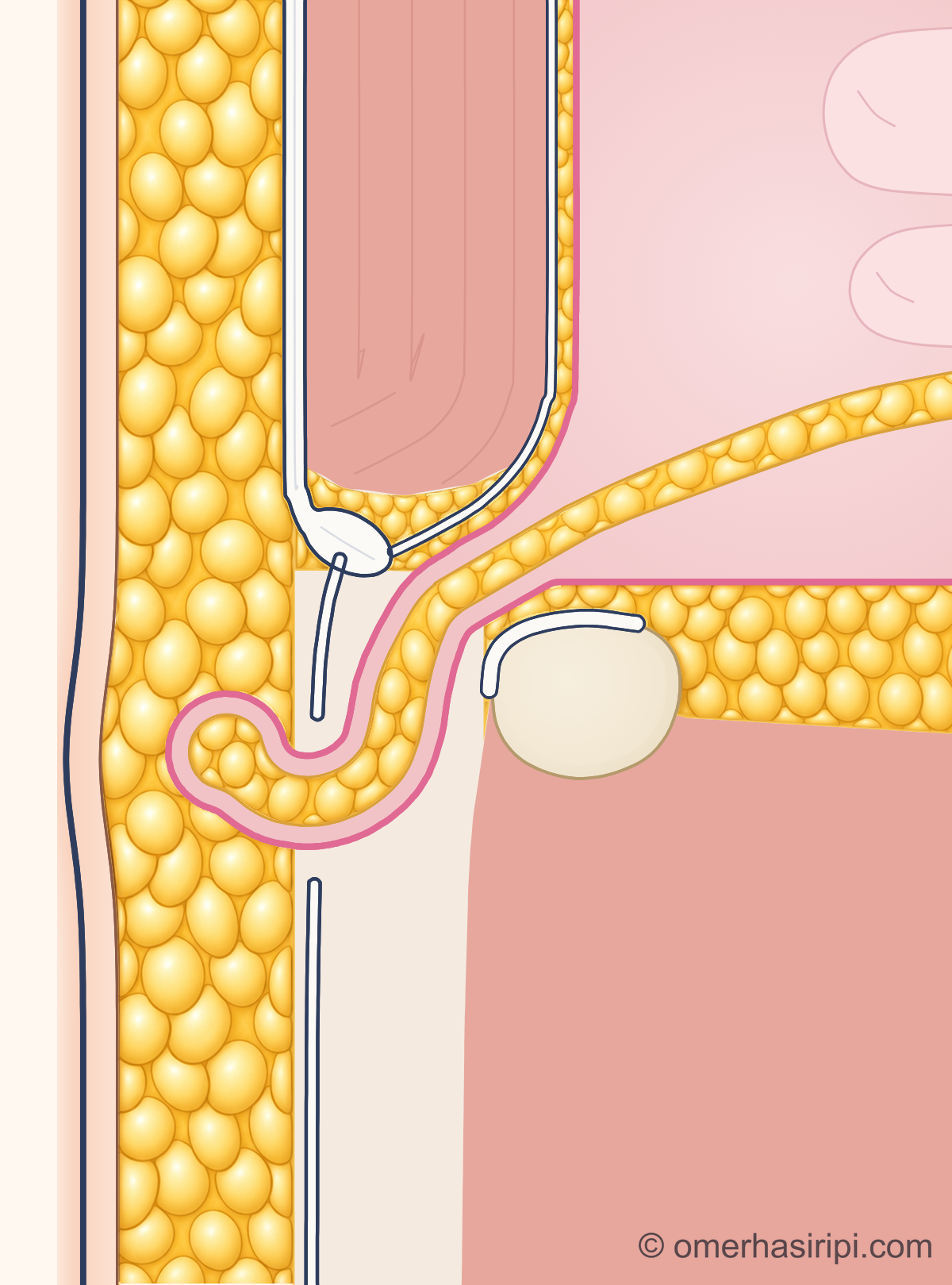
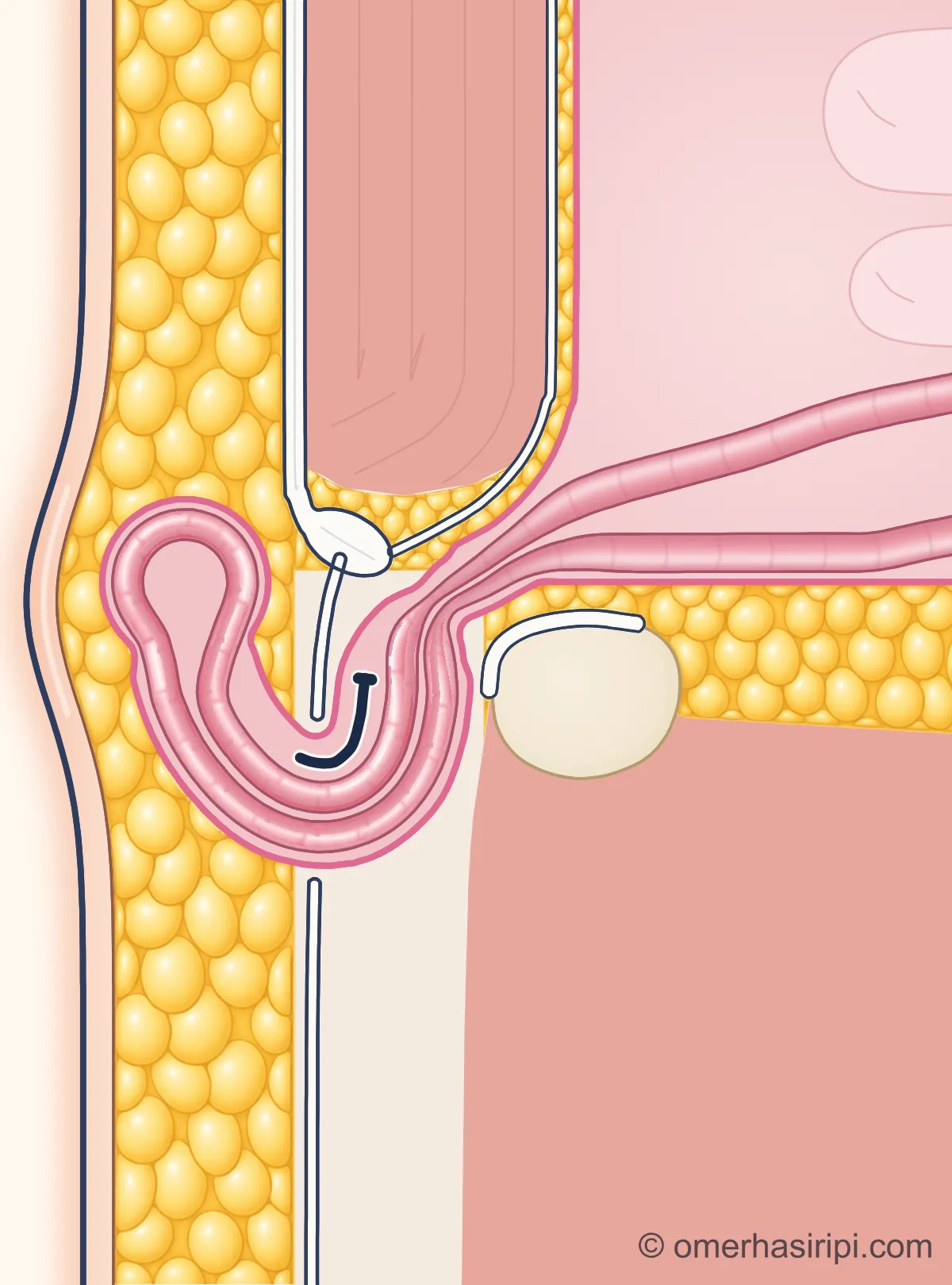
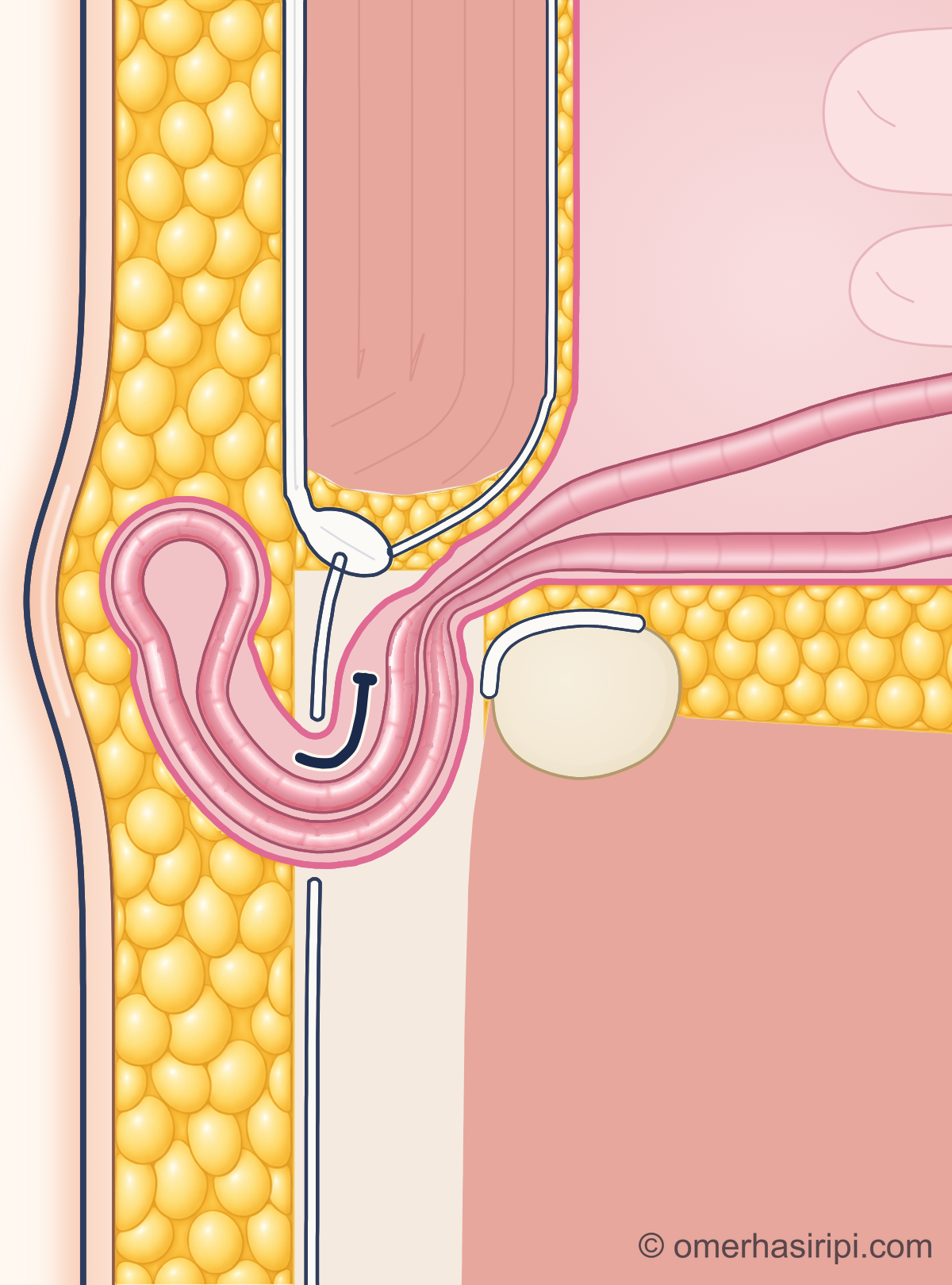
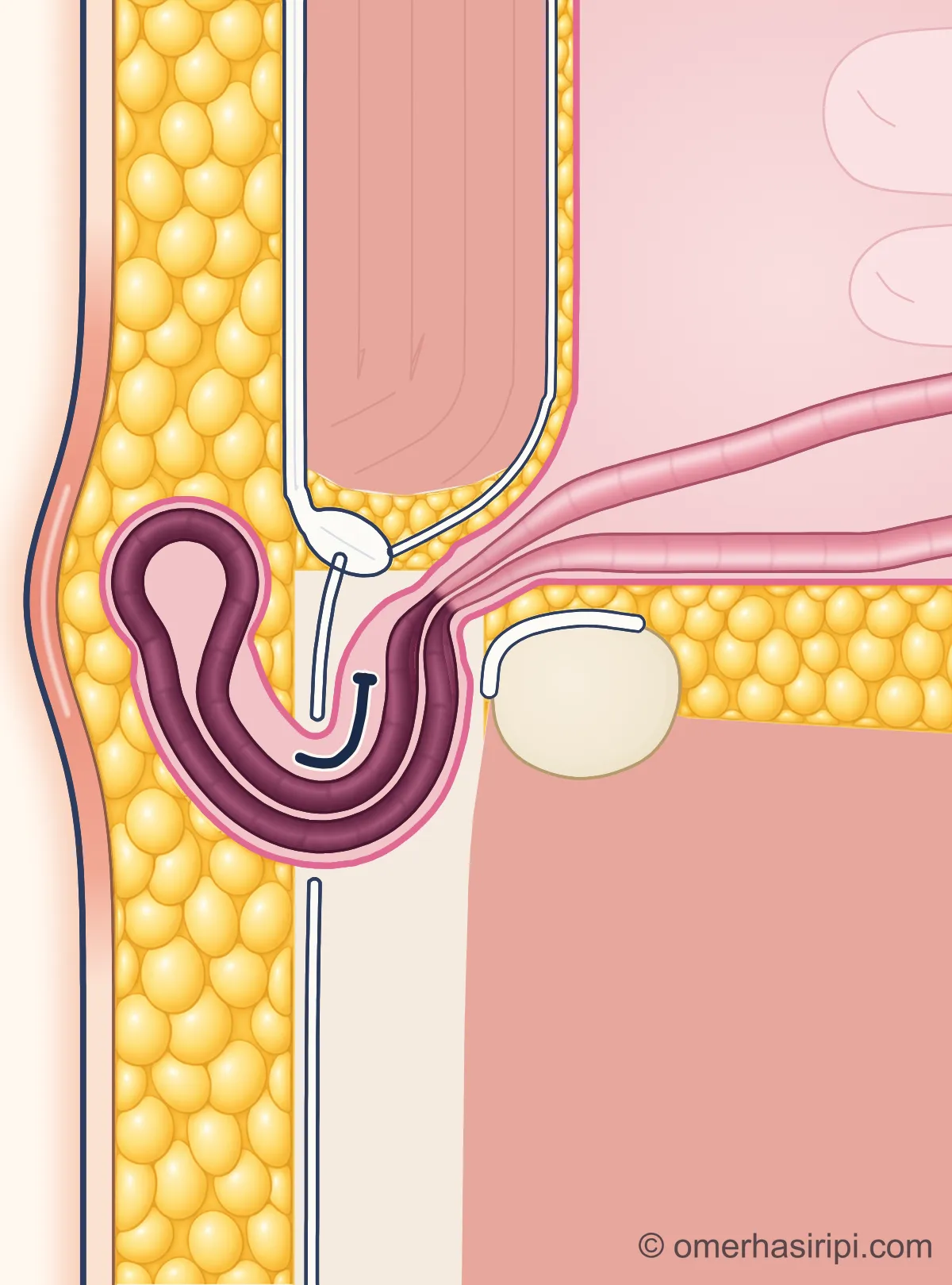
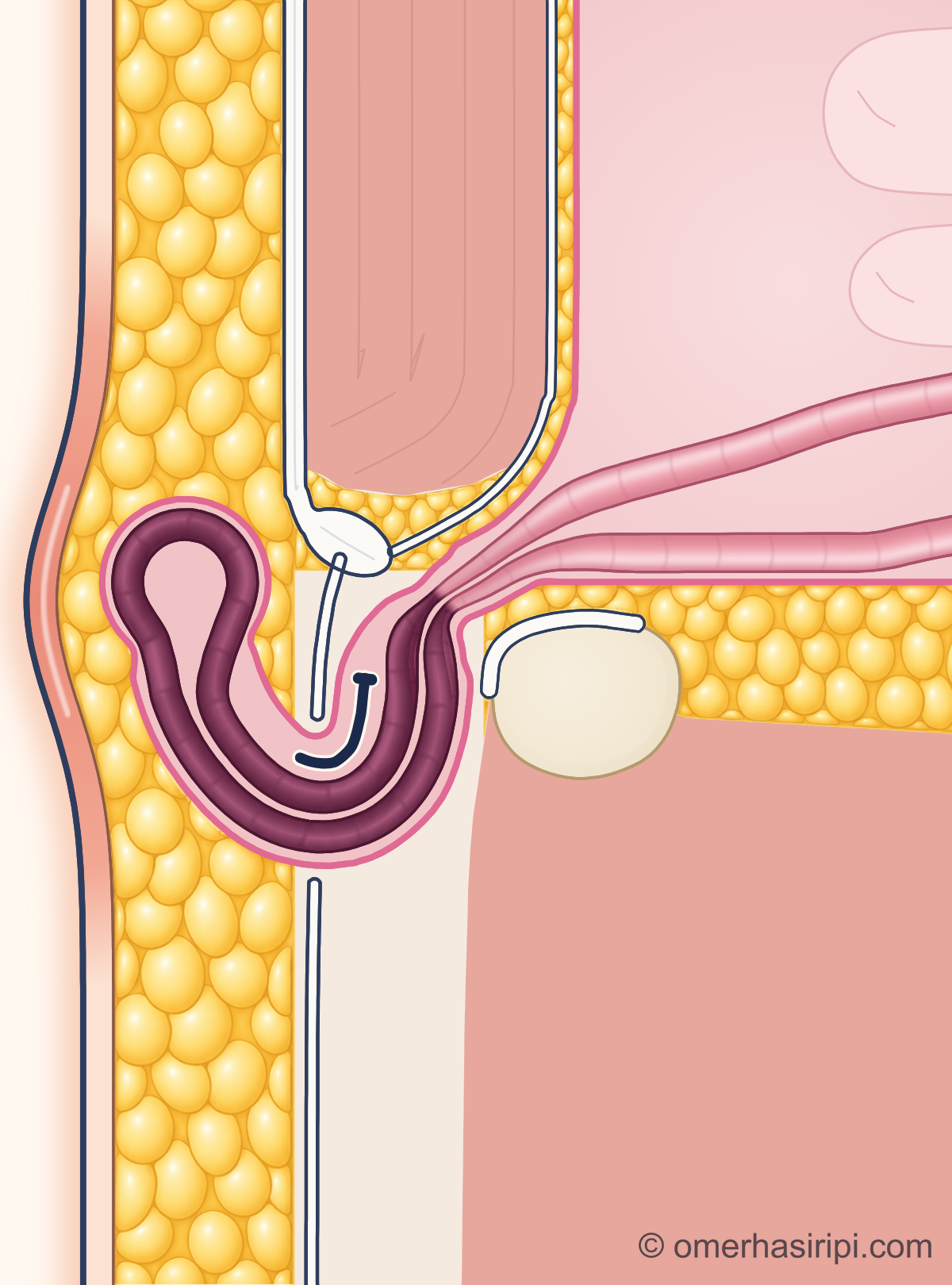
What is a femoral hernia and where does it occur?
A femoral hernia occurs when fatty tissue or bowel from inside the abdomen protrudes through the femoral canal below the inguinal ligament[1, 4, 5, 10]. A swelling may be noticed in the groin, at the top of the thigh[5]. The femoral canal lies on the inner side of the leg’s main vein[4, 8, 10]. A groin hernia, on the other hand, comes through the inguinal canal above the inguinal ligament; the two types can be difficult to distinguish even during an examination[1, 8, 10].
Who gets a femoral hernia?
Femoral hernia repairs account for approximately 2–4% of all operations for hernias in the groin area; this is not the rate of occurrence in the general population[1]. They are seen about four times as often in women; although they occur particularly in older women, they can also occur in men[1, 3, 5]. In a series of 52 patients from two university hospitals in Istanbul, there were 46 women and six men; the average age was 63[3]. These figures are not national rates.
What are the symptoms of a femoral hernia?
There may be a swelling in the groin, at the top of the thigh, pain around the swelling that comes and goes, or discomfort when walking; sometimes there are no symptoms at all[1, 5]. The swelling may become more noticeable when coughing and may become smaller when lying down[6]. If a swelling that previously went back in suddenly no longer does so, seek medical help immediately[1].
How is a femoral hernia distinguished from a groin hernia?
A swelling below the inguinal ligament suggests a femoral hernia; however, its location alone cannot provide a reliable diagnosis[1, 4]. The doctor will first examine you; if the diagnosis is uncertain, they may use ultrasound[1]. If ultrasound does not provide an answer, dynamic magnetic resonance imaging (MRI) or dynamic computed tomography (CT) performed while straining may be considered[1]. In women with a hernia in the groin area, a femoral hernia should be specifically looked for; in women, no examination or test can reliably distinguish the two types in every case[1].
Is a femoral hernia dangerous?
In a femoral hernia, the tissue inside may become trapped and unable to go back in; if its blood supply is cut off, the tissue may be damaged (a strangulated hernia)[1, 5]. This risk is higher than with a groin hernia, and emergency surgery and the need to remove the damaged part of the bowel are more common[1, 3]. In the study of 52 people in Istanbul, 27 underwent emergency surgery and a section of bowel was removed in four people in this group[3]. The rates in this selected group of patients cannot be interpreted as the risk in the general population.
Does a femoral hernia go away on its own, and can it wait?
Hernias in the groin area do not disappear without treatment; a femoral hernia is repaired through surgery[1, 4]. HerniaSurge does not recommend watchful waiting for a femoral hernia without symptoms; it recommends surgery in a timely manner[1]. A consensus report specific to Denmark exceptionally accepts postponement for a young person without symptoms, after explaining the signs of strangulation; this is not the general recommendation of the international guideline[9]. Decide on the timing of surgery with your surgeon[1, 5].
How is femoral hernia surgery performed?
A femoral hernia can be repaired by open or keyhole (laparoscopic) surgery: in the open method, one cut is made in the groin; in the keyhole method, one or several small cuts are made. Healthy tissue in the hernia sac is put back in place[1, 5]. Your surgeon and anaesthetist will discuss the anaesthetic options with you[1]. The HerniaSurge guideline recommends timely keyhole repair using mesh (surgical mesh that strengthens the hernia area) for a femoral hernia if there is sufficient experience; in women, this approach may also help identify a femoral hernia that has been missed[1]. The choice of method depends on your health, the features of the hernia and the surgeon’s experience[1, 5]. Tissue that has lost its blood supply may be removed; emergency surgery is recommended if strangulation is suspected[2, 5]. The operation usually takes about 30 minutes, but it can take longer[5].
What is recovery like after femoral hernia surgery?
Recovery from femoral hernia surgery usually takes 4–6 weeks; returning to work may be possible after 1–3 weeks, depending on how the operation was performed and the type of work[5]. The NHS recommends avoiding heavy lifting during this period; HerniaSurge, however, does not recommend mandatory lifting restrictions after surgery for a hernia in the groin area and states that normal activities can be resumed when you feel comfortable[1, 5]. Discuss with your surgeon when you can return to heavy lifting, work and other activities[11].
When should you see a doctor after surgery?
A collection of blood (haematoma) may cause bruising and swelling at the operation site; most go away on their own within 2–4 weeks[1]. If it causes severe pain or noticeable swelling, or if the skin over it turns black, see a doctor urgently[1].
According to patient information provided for groin hernia surgery, call 112 or go to the nearest emergency department if you have severe shortness of breath, pain in your chest or upper back, cough up more than a few small spots or streaks of blood, or your heart beats very fast, very slowly or irregularly; do not drive yourself to the emergency department[7]. Seek medical help without delay if you have a high temperature, chills or shivering, increasing abdominal pain or swelling, heavy bleeding from the wound, or nausea or vomiting that continues 24 hours after surgery[7]. Pus from the wound or a wound that is painful, swollen, warm or red; throbbing or cramp-like pain in the leg; new or worsening shortness of breath that is not severe; or coughing up a few small spots or streaks of blood also require medical help without delay[7]. If you do not have the symptoms above, contact your surgeon if you have pain that does not go away with the recommended painkillers, moderate, severe or prolonged pain, or if your groin symptoms from before surgery return[1]. It may be difficult to pass urine immediately after surgery; if you have difficulty passing urine, contact your surgeon immediately[1, 11]. If you do not have the symptoms above, call your surgeon if you have nausea or vomiting after surgery, cannot eat or drink fluids, or develop a cough[11].
Which department treats a femoral hernia?
In adults, general surgery assesses and treats femoral hernias[1, 4]. If you suspect you have a femoral hernia, see your family doctor or a surgeon[1, 5].
Sources
15
- HerniaSurge Group. International guidelines for groin hernia management. Hernia. 2018;22:1–165. doi: 10.1007/s10029-017-1668-x. PubMed: 29330835.
- Stabilini C, van Veenendaal N, Aasvang E, Agresta F, Aufenacker T, Berrevoet F, et al. Update of the international HerniaSurge guidelines for groin hernia management. BJS Open. 2023;7:zrad080. doi: 10.1093/bjsopen/zrad080. PubMed: 37862616.
- Kunduz E, Sormaz İC, Yapalak Y, Bektaşoğlu HK, Gök AFK. Comparison of surgical techniques and results for emergency or elective femoral hernia repair. Ulus Travma Acil Cerrahi Derg. 2019;25:611–615. doi: 10.14744/tjtes.2019.04524. PubMed: 31701494.
- Kalayci T, Iliklerden UH, Kotan MC. Factors Affecting Morbidity, Mortality, and Recurrence in Incarcerated Femoral Hernia. J Coll Physicians Surg Pak. 2022;32:213–219. doi: 10.29271/jcpsp.2022.02.213. PubMed: 35108794.
- NHS. Femoral hernia (thigh hernia): patient information page. Last reviewed: 15 October 2026. Text: www.nhs.uk.
- NHS. Hernia; patient information page. Last reviewed: 19 May 2026. Text: www.nhs.uk.
- NHS. Inguinal hernia repair; patient information page about groin hernia surgery. Last reviewed: 28 February 2025. Text: www.nhs.uk.
- Chiu MK, Hadied MO, Klochko C, van Holsbeeck MT. Comparison of patient characteristics and treatment approaches for femoral and inguinal hernias utilizing dynamic ultrasound at a single institution. Hernia. 2023;27:1245–1252. doi: 10.1007/s10029-023-02810-2. PubMed: 37253821.
- Kirk M, Henriksen NA, Christoffersen MW, Andresen K, Dorfelt A, Krogsgaard M, et al. Management of Adult Groin Hernia in Denmark: a National Updated Consensus. J Abdom Wall Surg. 2025;4:14904. Danish consensus report; not an official international guideline. doi: 10.3389/jaws.2025.14904. PubMed: 40860237.
- Simons MP, Aufenacker T, Bay-Nielsen M, Bouillot JL, Campanelli G, Conze J, et al. European Hernia Society guidelines on the treatment of inguinal hernia in adult patients. Hernia. 2009;13:343–403. doi: 10.1007/s10029-009-0529-7. PubMed: 19636493.
- SAGES (Society of American Gastrointestinal and Endoscopic Surgeons). Inguinal Hernia Repair Surgery: Patient Information; patient information page about groin hernia surgery. Reviewed: 6 May 2026. Text: www.sages.org.
- Patel PJ, Azmat CE, Goethals A. Femoral Hernia. StatPearls [Internet]. Treasure Island (FL): StatPearls Publishing; last updated: 3 May 2025. PubMed: 30571070. Text: www.ncbi.nlm.nih.gov.
- Nikolopoulos I, Oderuth E, Ntakomyti E, Kald B. Intestinal Obstruction due to Bilateral Strangulated Femoral Hernias. Case Rep Surg. 2014;2014:195736. doi: 10.1155/2014/195736.
- Ismaili G, Vaughan M, Abdelhafiz TA. Bilateral strangulated femoral hernia in a male: a rare surgical case report. J Surg Case Rep. 2024;2024:rjae718. doi: 10.1093/jscr/rjae718.
- OpenStax. Anatomy and Physiology 2e. 2022. Section 23.1: Overview of the Digestive System; full text accessed 28 October 2026. Text: openstax.org.
Medical review of the Turkish original: Op. Dr. Ömer Seyfullah Hasıripi, . This page is a translation checked by AI reviewers; the Turkish version prevails.
This page is for general information; it does not replace an examination. See a doctor about your symptoms.